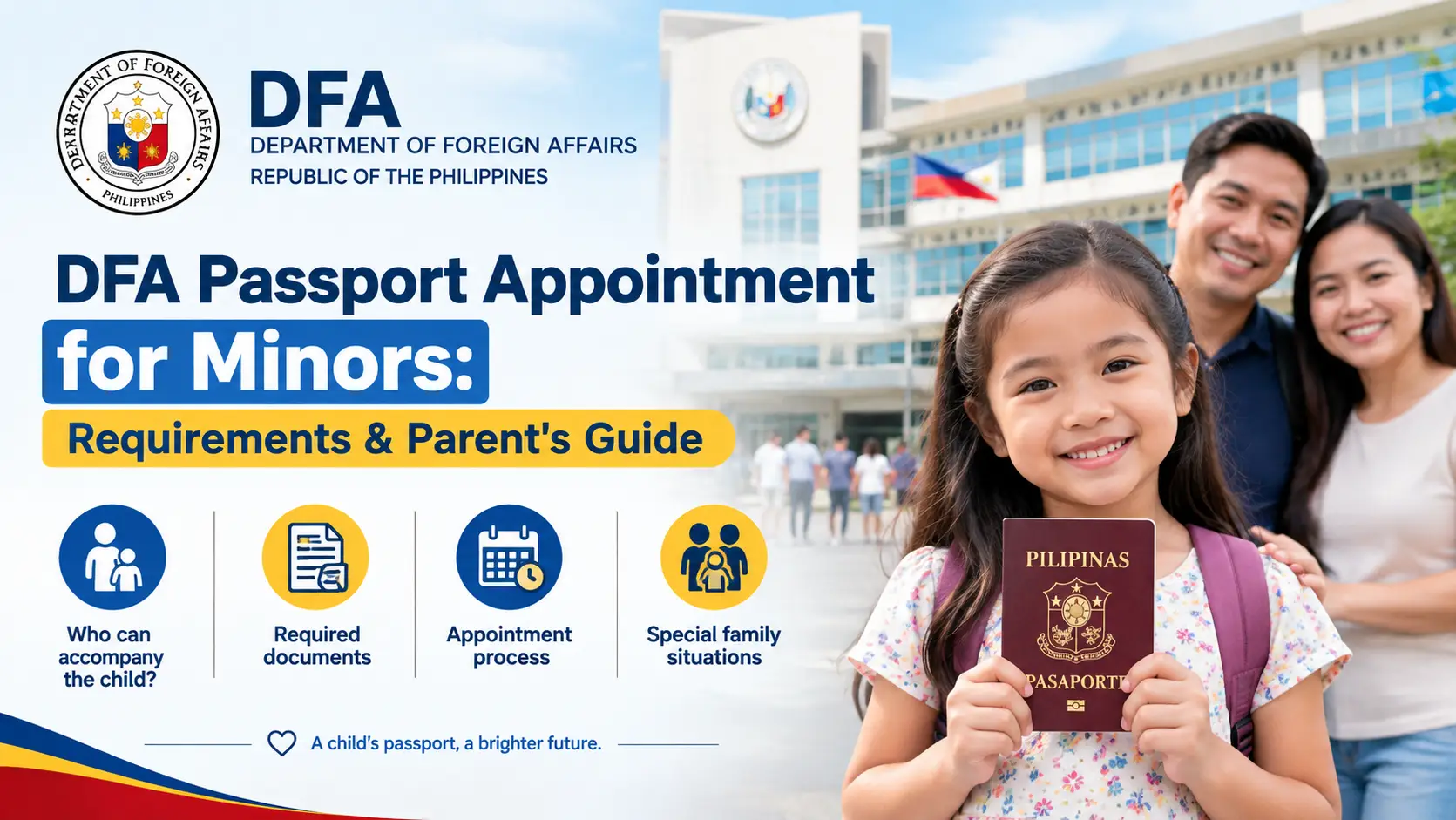
DFA Passport Appointment for Minors: Requirements & Parent’s Guide
Bringing a child to the DFA for a passport appointment is rarely as simple as bringing an adult, since one missing signature or the wrong accompanying relative can send you home without a passport.
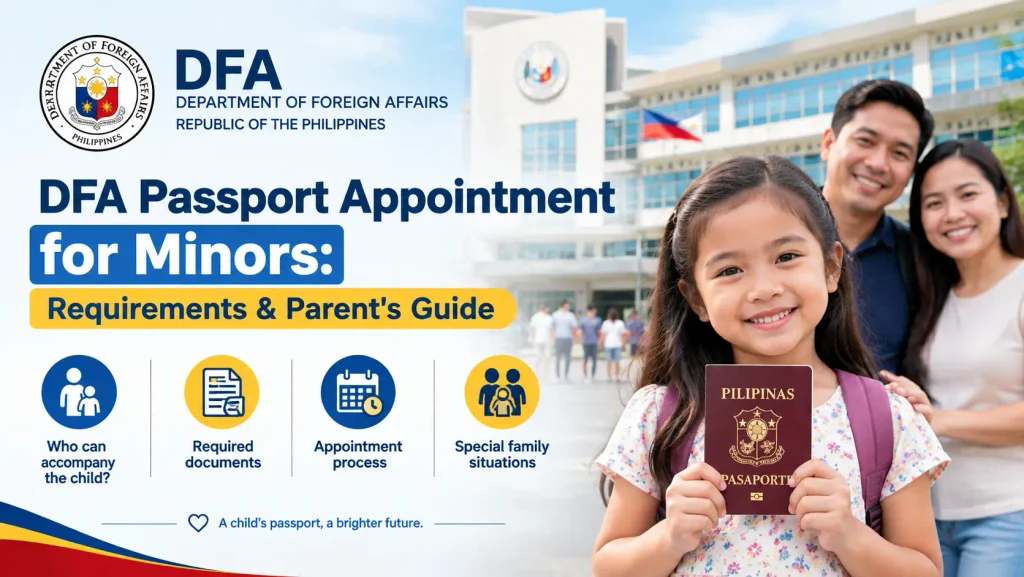
Parents who are separated, solo, working abroad, or raising a child as a guardian often find the requirements confusing, especially when the usual documents do not quite fit their family situation. This guide walks through exactly who can bring the child, what to prepare, and how the more complicated family situations are typically handled.
Who Can Apply for a Minor Passport
A minor passport application covers any Filipino citizen below 18 years old, from newborns to teenagers. A minor must personally appear for the application together with a parent, legal guardian, or authorized adult companion, depending on the child’s circumstances and the documents required by the DFA. Unlike adult applications, a child cannot book or attend a DFA appointment alone, and the DFA needs proof of the relationship between the child and the adult presenting them, usually through the child’s PSA birth certificate together with the accompanying adult’s valid ID or passport.
Under the current DFA Passport Appointment System, minors seven (7) years old and below do not need an online appointment and may avail of the Courtesy Lane, provided they are accompanied by a parent, legal guardian, or authorized representative. Solo parents with a valid Solo Parent ID are also among the categories that may apply without an appointment. Applicants should still check the current DFA rules and confirm with their chosen office before visiting, since courtesy lane guidelines can be updated.
New Application vs Passport Renewal
A first-time minor applicant needs a complete set of civil registry documents since the DFA has no prior record on file, while a renewing minor mainly needs the expiring or expired passport along with proof of the accompanying adult’s identity. Renewal for a minor already in the DFA system may move somewhat more smoothly at the counter since biometric and personal data exist from the earlier application, though this can still vary by branch and case load. Either way, personal appearance of the child is required at both stages, since the DFA needs a current photo and fingerprint capture regardless of whether it is a new passport or a renewal.
Choosing the Correct Adult Companion
Who can legally bring the child to the DFA depends heavily on the family’s situation, and getting this wrong is one of the more common reasons minor applications get delayed or rejected outright.
Who May Accompany the Child?
In the most common situation, where both parents are married and available, either parent can accompany the child by presenting their own valid passport or government-issued ID along with the child’s PSA birth certificate. The documents required when only one parent accompanies the child depend on the parents’ marital status and the child’s circumstances. For married parents, DFA requirements generally include an original PSA marriage certificate of the parents when only one of them is present at the appointment. For unmarried parents, the mother is generally expected to accompany the child; if she cannot, a notarized and authenticated Affidavit of Support and/or Consent executed by the mother is typically required instead. Parents who need more information about the general process can read the guide to Philippine passport applications before booking an appointment for their child.
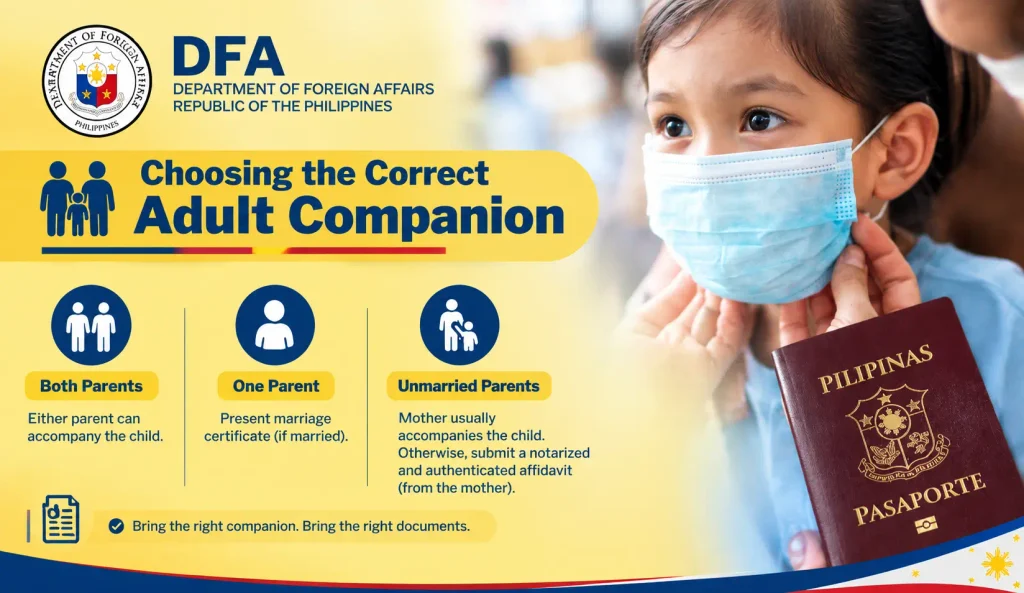
When neither parent is available and an authorized adult brings the child instead, that adult generally needs a Special Power of Attorney signed by either parent or the legal guardian, along with a copy of the signing parent’s valid ID attached to the SPA. Foreign parents accompanying a Filipino child are usually asked to present their foreign passport together with their Filipino spouse’s passport or valid ID to establish the family relationship. For children under the care of a court-appointed guardian rather than a parent, a Letter of Guardianship issued by a Family Court, along with the guardian’s valid ID, generally takes the place of parental documents.
Documents Required for a Minor Passport Appointment
Every minor applicant needs a baseline set of documents before anything specific to their family situation comes into play.
Basic Requirements
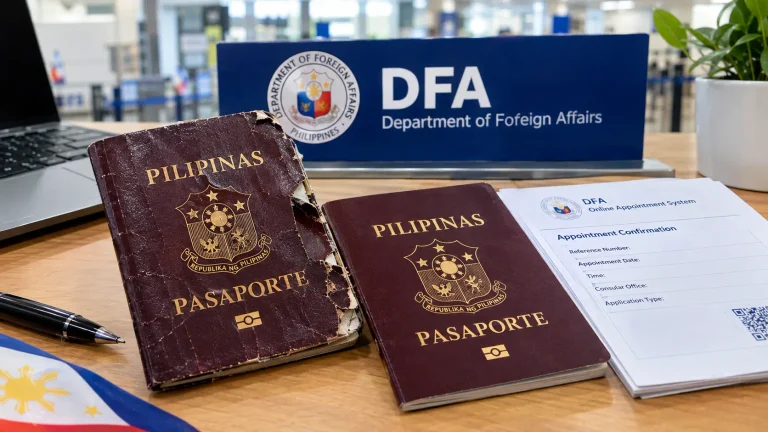
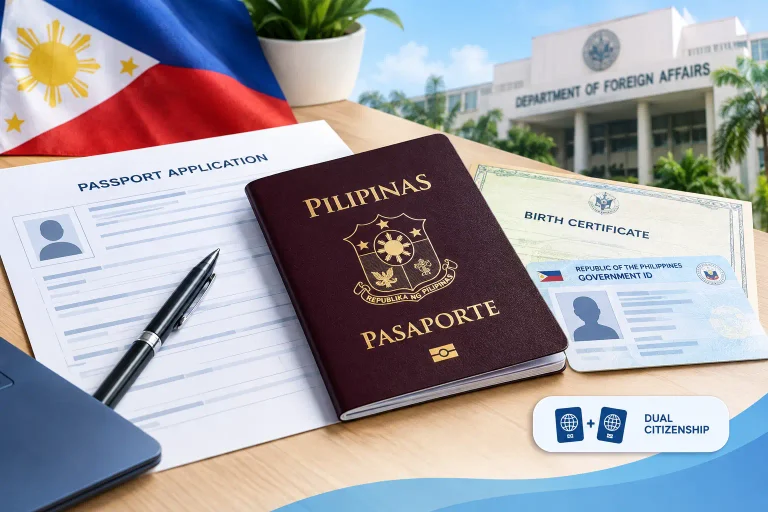
The standard document set for a minor passport includes the child’s original PSA-issued birth certificate, a printed confirmed appointment form, and the original valid ID or passport of the accompanying parent or guardian, along with a photocopy of that ID. School-age children are typically also asked for a school ID or a Certificate of Enrollment with a recent photo, since this helps confirm the child’s current appearance and identity. If the child has not yet started school, a notarized affidavit explaining this can generally take the place of the school document.
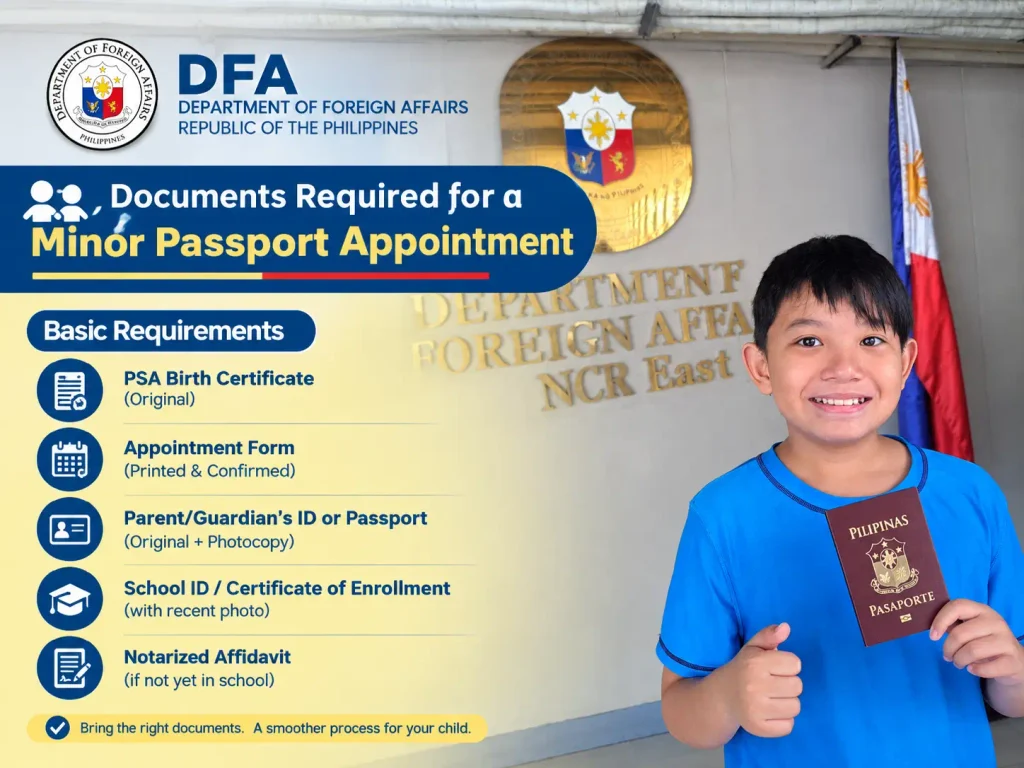
Renewal applicants should bring the child’s current or most recently expired passport in addition to these basic documents, since this speeds up verification against the existing DFA record. Keeping photocopies of everything in a single folder, rather than loose in a bag, makes the counter process noticeably faster.
Minor Passport Requirements by Situation
Family situations rarely fit neatly into a single template, so the DFA maintains a set of supplemental document requirements depending on the child’s circumstances.
If the child’s parents are married and both available, the standard documents above are typically sufficient without further paperwork. For a non-marital minor, the DFA applies specific rules based on the information recorded in the child’s PSA Certificate of Live Birth. Generally, the mother accompanies the child during the passport application process; if she cannot accompany the child, the required authorization, such as a notarized and authenticated Affidavit of Support and/or Consent, along with supporting documents, must be submitted instead. In cases where the mother has passed away and the child was acknowledged by the father, the biological father is usually expected to appear personally with the child, along with the PSA death certificate of the mother and the birth certificate showing the acknowledgment of paternity.
When both parents are unavailable, whether due to death, absence, or being unknown, and no legal guardian has been court-appointed, the authority to decide who accompanies the child generally falls to whoever holds substitute parental authority under Article 216 of the Family Code, such as a surviving grandparent or an adult sibling over 21 years old, supported by the relevant PSA death certificates. Adopted children, foundlings, and children whose parents are separated, annulled, or divorced each tend to have their own specific document combinations, so it is best to review the requirements for your exact situation on the official DFA page or confirm directly with your chosen branch before your appointment.
New Passport vs Passport Renewal
Beyond the document differences already covered, new applications and renewals also differ slightly in fees, processing expectations, and passport validity for minors. A minor’s passport is generally valid for five years rather than the ten years given to adult passports, since a child’s appearance changes quickly while growing up. This shorter validity period means many families end up going through the minor passport process more than once before the child turns 18.
Regular and expedited processing fees for minors typically mirror the standard adult passport fees, though it is worth confirming current pricing on the official DFA site before booking, since fees are occasionally adjusted. Renewal applicants may find the counter process somewhat quicker since the child’s earlier biometric data is already on file, but as with adult renewals, this is not a guaranteed outcome and can depend on how busy the branch is that day.
What Happens During the Appointment
Once you arrive with the child and complete documents, staff verify your printed appointment confirmation before calling you to a counter for document checking. The child’s photo and fingerprints are captured on-site as part of the standard biometric process, and DFA staff will cross-check the submitted documents against the child’s and accompanying adult’s information. Because personal appearance is required, the child needs to be present and reasonably cooperative during this step, particularly for the photo capture. Before attending the appointment, check the complete passport requirements and prepare the documents applicable to your child’s situation.
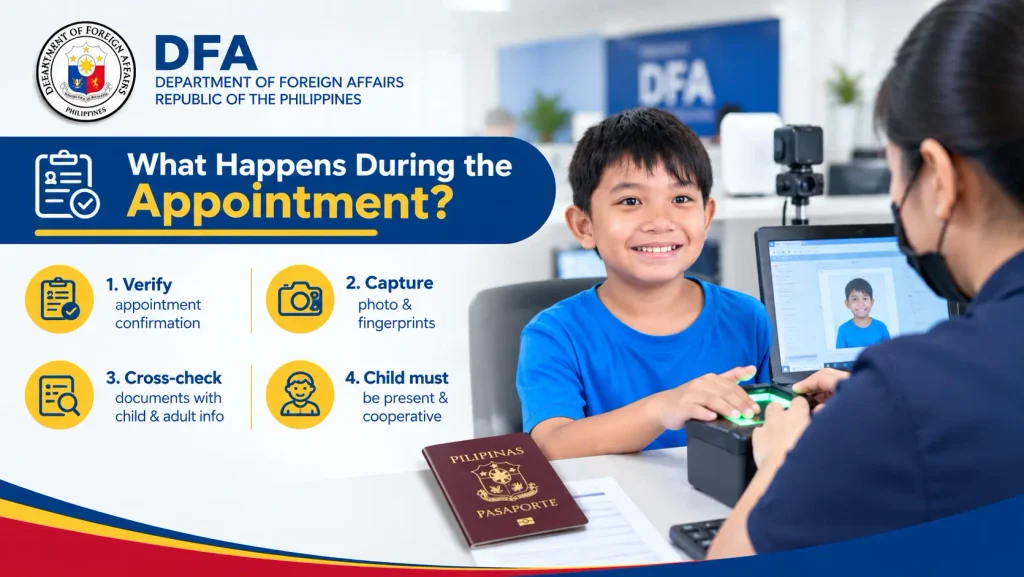
Depending on how busy the branch is that day, the actual counter process for a straightforward application usually takes a matter of minutes once your number is called, though the overall time in the office, including queueing, can run longer. Toddlers and younger children can sometimes find the wait and the biometric capture unsettling, so bringing something familiar to keep them calm, like a small toy or snack, can make the visit smoother for everyone.
Preparing for Appointment Day
A little preparation the night before goes a long way toward avoiding a wasted trip to the DFA with a child in tow.
Parent’s Checklist
Parents should prepare the child’s original PSA birth certificate, their own original valid ID or passport with a photocopy, the printed confirmed appointment form, and any situation-specific documents such as an SPA, Letter of Guardianship, or death certificate that applies to the family’s circumstances. Reviewing every document against the child’s name spelling and birth date ahead of time helps catch mismatches before they become a problem at the counter. It also helps to confirm the accepted valid ID list and any current dress code or entry guidelines with your chosen branch beforehand, since these details can vary.
Child’s Checklist
For the child, bring their school ID or Certificate of Enrollment if applicable, and make sure they are dressed appropriately and reasonably rested for the visit, since a tired or overstimulated child can make the biometric capture more difficult. If the child is old enough to understand what is happening, a brief, simple explanation of what to expect,
such as having their photo and fingerprints taken, can reduce anxiety once you reach the counter. For infants and toddlers, packing a favorite
comfort item can help keep them settled during the wait.
Special Cases Parents Should Know
A handful of situations come up often enough that they deserve specific attention before your appointment.
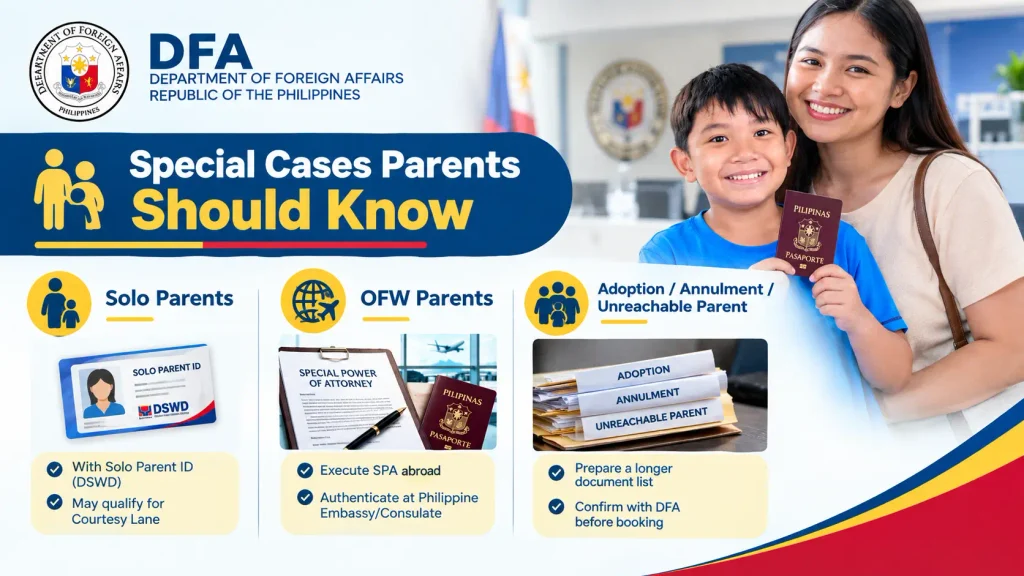
Solo parents with an official Solo Parent ID from their local DSWD office are generally able to accompany their child with fewer additional documents, and solo parent status can also come with Courtesy Lane consideration depending on current DFA rules. OFW parents who cannot travel home before the child’s appointment typically need to execute a Special Power of Attorney while abroad, which then requires authentication by the nearest Philippine Embassy or Consulate before it can be used at the DFA. Families dealing with adoption, annulment, or a parent who is currently unreachable should expect to gather a slightly longer document list, and confirming the exact combination needed with the DFA or through their official channels before booking an appointment can save an otherwise wasted trip.
Final Thoughts
A DFA passport appointment for a minor comes down to two things: proving the child’s identity and citizenship, and proving that the adult bringing them has the right to do so. Once you know which category your family situation falls under, whether that is the standard two-parent scenario, a solo parent household, or a more complex guardianship situation, gathering the right documents becomes a much shorter task. Taking the time to prepare everything before booking your appointment is what separates a smooth visit from a frustrating one.