Philippine Passport Application for First-Time Applicants
Your first passport application feels bigger than it actually is. You have no old passport to fall back on. No prior DFA record to speed things along. Just a stack of documents and a lot of questions about whether you got everything right.
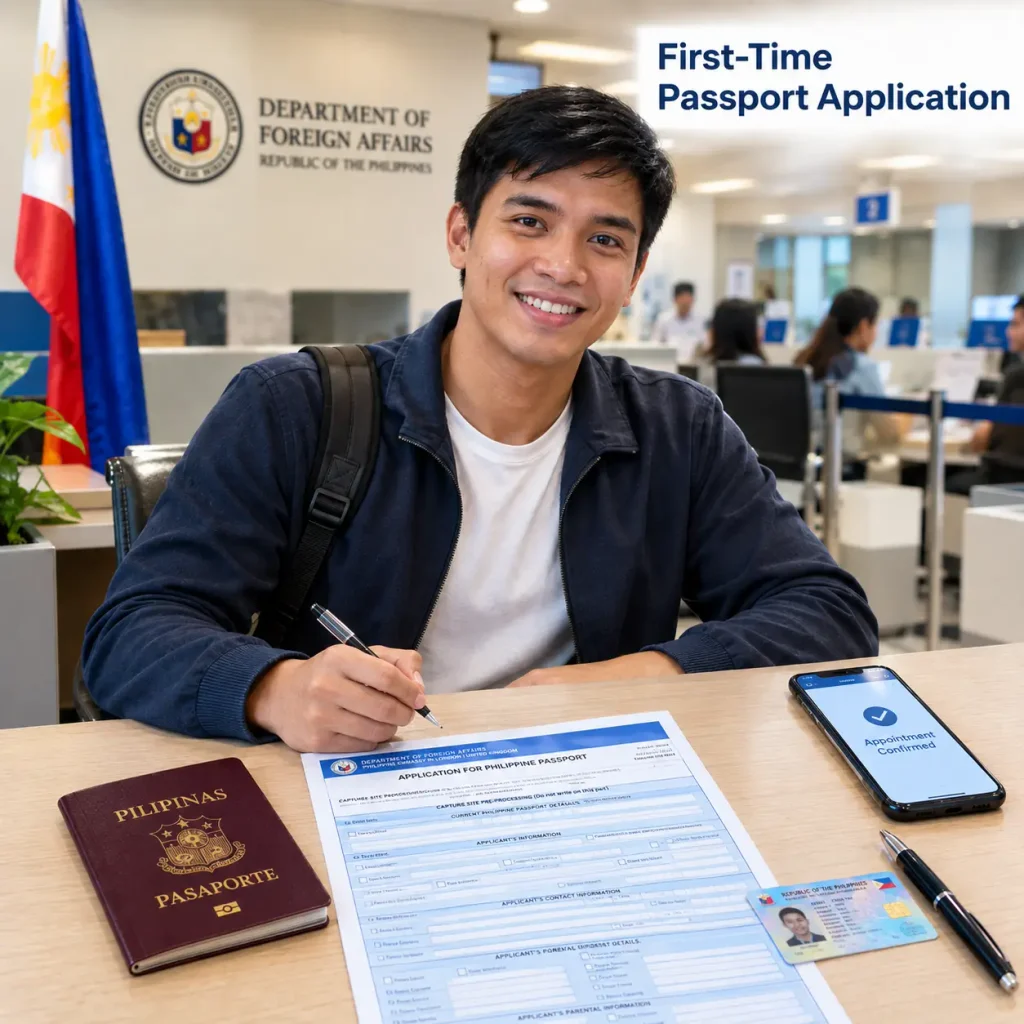
This guide removes the guesswork. It walks through exactly who qualifies, what to prepare, how the application moves from booking to release, and which mistakes trip up first-timers the most.
Philippine Passport Requirements
Before anything else, it helps to understand who this process applies to and why the DFA structures it the way it does.
Who Can Apply for a Philippine Passport?
Any Filipino citizen can apply for a Philippine passport, regardless of age. This includes citizens by birth, by naturalization, or by reacquisition of citizenship under Republic Act No. 9225. Minors can also apply, though they need a parent or legal guardian to accompany them through the process. You should also check the latest DFA passport fees so you can prepare for the applicable processing charges.
Applicants who retained or reacquired Filipino citizenship generally need extra proof, such as an Identification Certificate from a Philippine Foreign Service Post or the Bureau of Immigration. Everyone else applies under the standard adult or minor track, depending on age.
Why First-Time Applicants Need a DFA Appointment
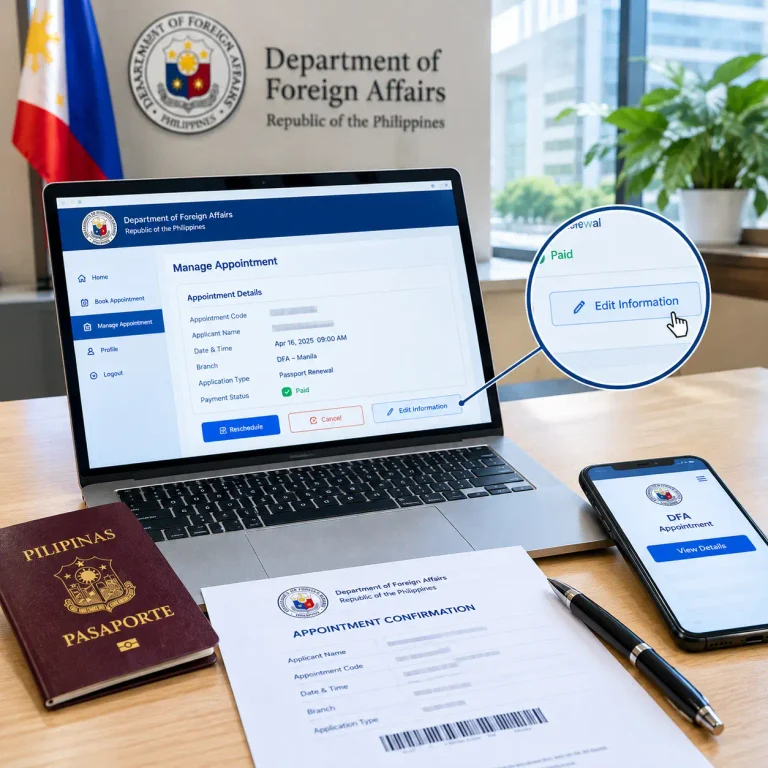
The DFA runs almost entirely on a confirmed-appointment system now. Most applicants need an online appointment, though the DFA also provides priority or walk-in accommodation for certain qualified applicants, including OFWs with sufficient proof, senior citizens, persons with disabilities, solo parents, pregnant women, and children seven years old and below, subject to the applicable DFA office rules and capacity. Everyone else, first-time applicants included, needs to book online before visiting a consular office.
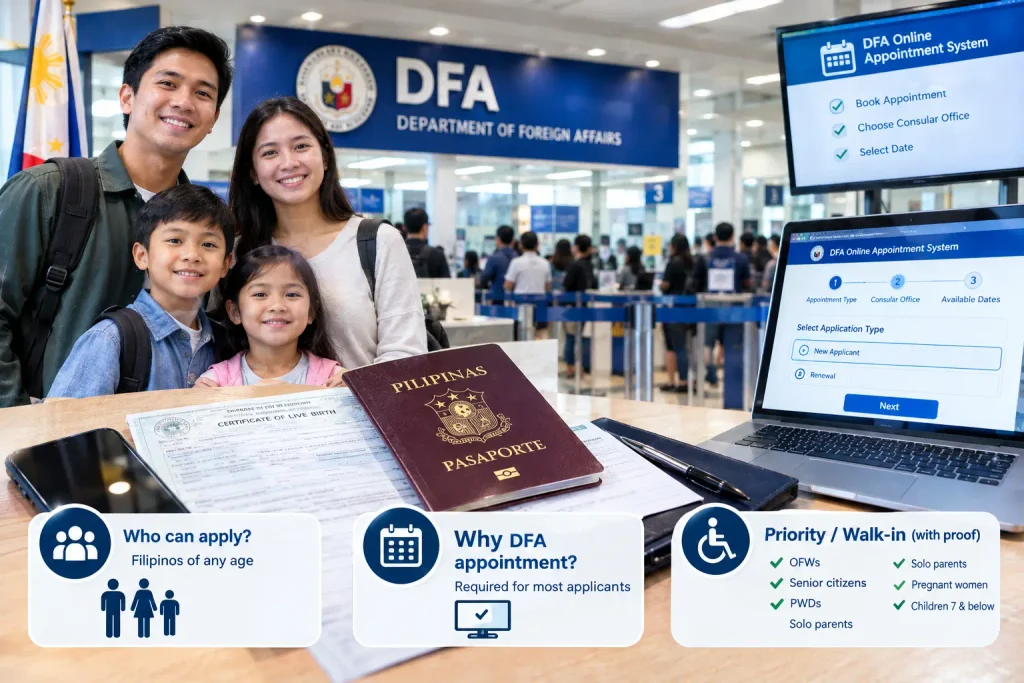
This system exists to manage the sheer volume of applicants nationwide and give each person a fixed slot instead of an open-ended line. For a first-timer, this means your entire application effectively starts the moment you secure a confirmed appointment, not the moment you show up at the office.
Requirements Before Applying
Preparing your documents correctly, before you even book your slot, removes the single biggest source of delay for first-time applicants.
Required Documents
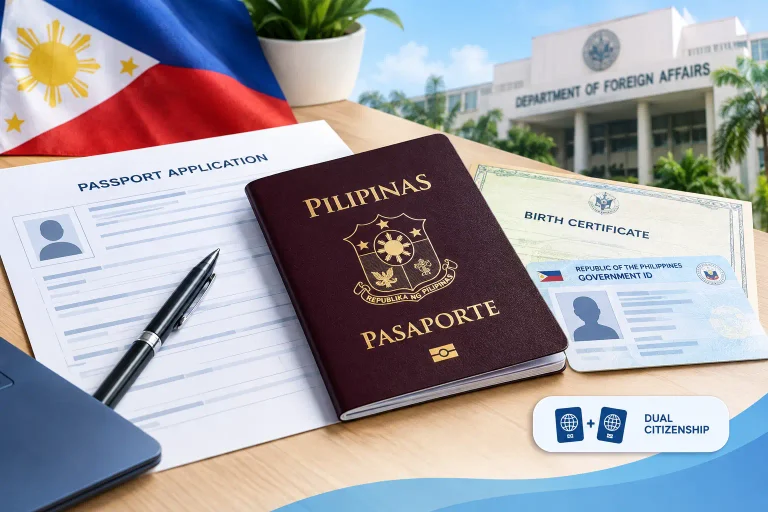
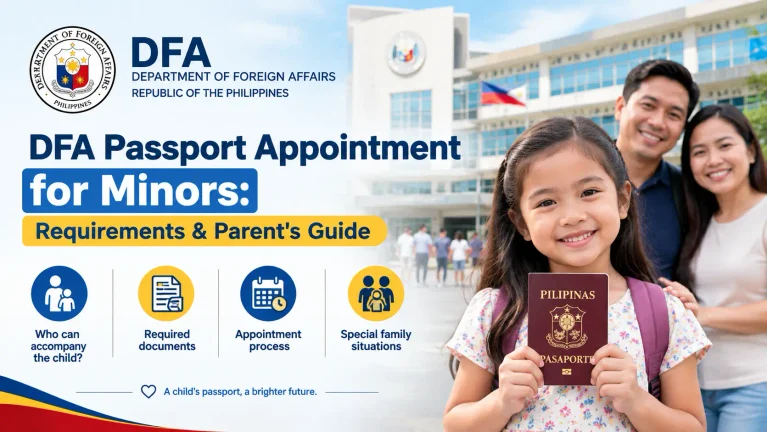
A first-time adult applicant generally needs personal appearance, a confirmed online appointment, a duly accomplished application form, an original PSA birth certificate, and an acceptable government-issued ID. Additional documents may be required depending on the applicant’s circumstances, such as marriage, citizenship, or birth-record issues. If your birth certificate entries are unclear or blurred, a transcribed copy from your Local Civil Registrar may be needed instead. Applicants born outside the Philippines may need a Report of Birth and other citizenship documents, depending on their circumstances. Parents applying for a passport for their child should also review the specific DFA passport appointment requirements for minors before preparing their documents.
Bring both the original and a clear photocopy of every document. Missing a required photocopy can delay your application or require you to obtain another copy before processing can continue.
Valid Government IDs
The DFA accepts a defined list of primary IDs, and using one that is expired or unrecognized can stall your application entirely. Commonly accepted IDs include:
PhilSys National ID (physical, ePhilID, or digital)
Driver’s license issued by the LTO
UMID card
PRC ID for licensed professionals
COMELEC-issued identification, where currently accepted by DFA
Senior citizen ID, where applicable
OWWA ID for registered overseas Filipino workers
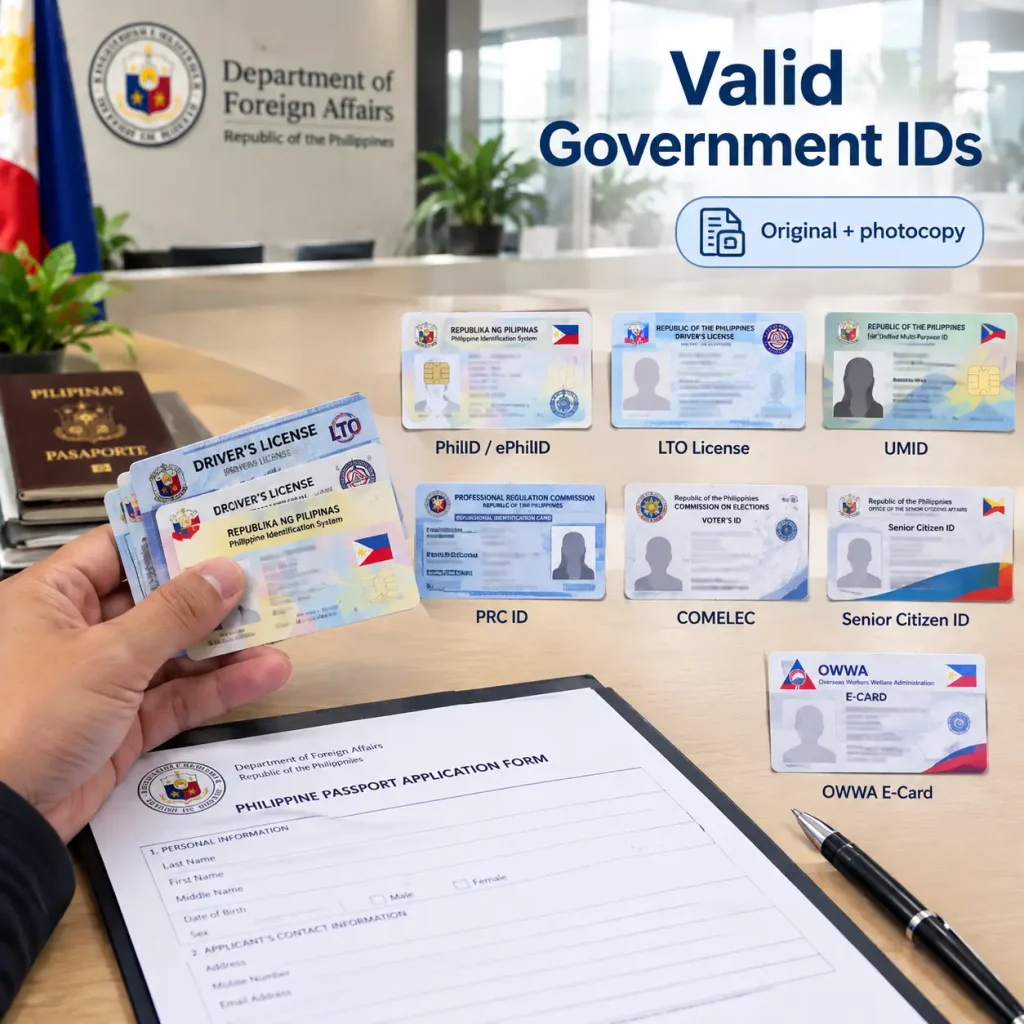
Confirm the current accepted list on the official DFA page before your appointment, since these details can be updated over time.
Information You Should Prepare
Beyond physical documents, know your complete legal name exactly as it appears on your PSA birth certificate. Confirm your correct birth date, place of birth, and current address as well. Small mismatches between your ID and your birth certificate, even a middle name spelled differently, are one of the most common reasons applications get flagged for further review.
How to Apply for a Philippine Passport
The application itself follows a fixed sequence. Skipping ahead or misunderstanding any single step can cost you your appointment slot.
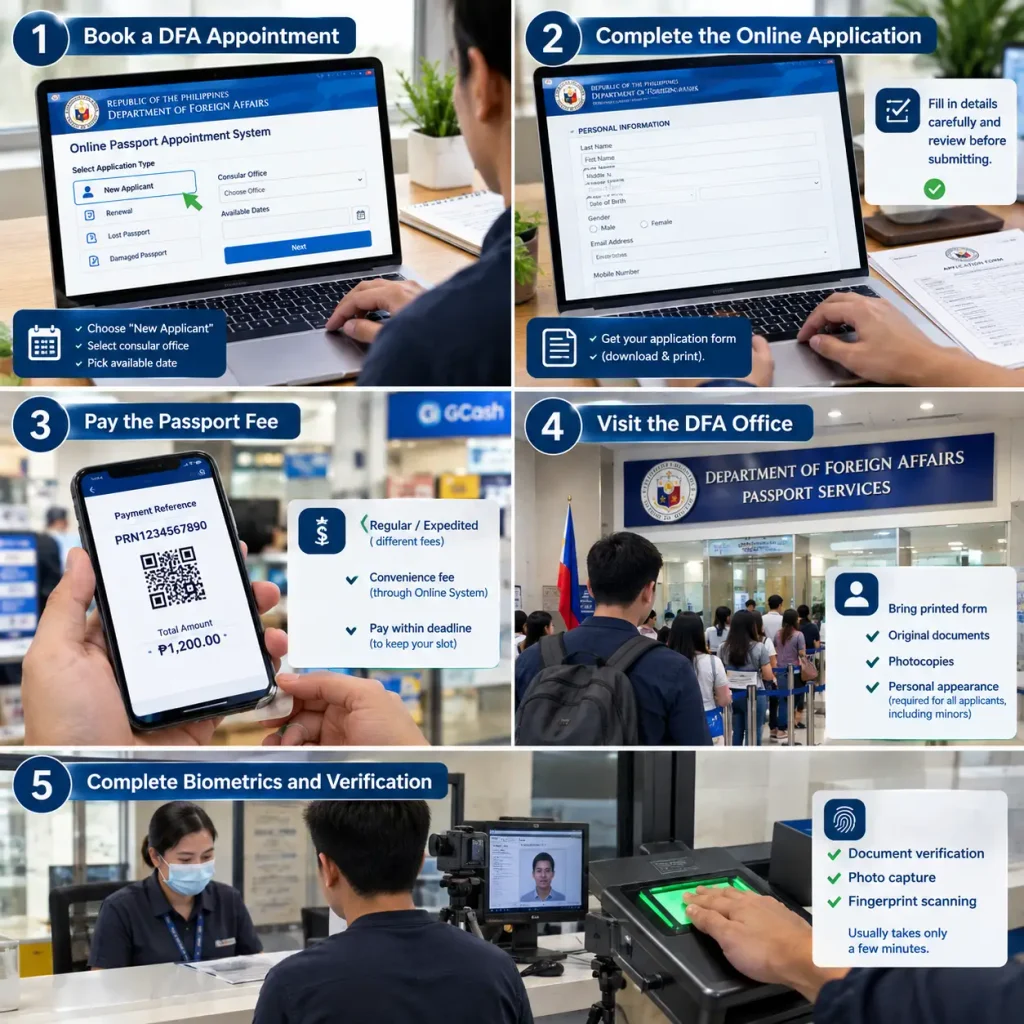
Book a DFA Appointment
Visit the official passport appointment website and select “new applicant” as your application type. Choose your preferred consular office, then browse available dates. Metro Manila branches tend to fill up fastest, so provincial or satellite branches inside malls are worth checking if your first choice shows no open slots.
Complete the Online Application
Fill in your personal details carefully, matching them exactly to your PSA documents. Review every field before submitting, since correcting mistakes after submission is often more complicated than getting it right the first time. Once submitted, you will typically receive a link to download and print your accomplished application form.
Pay the Passport Fee
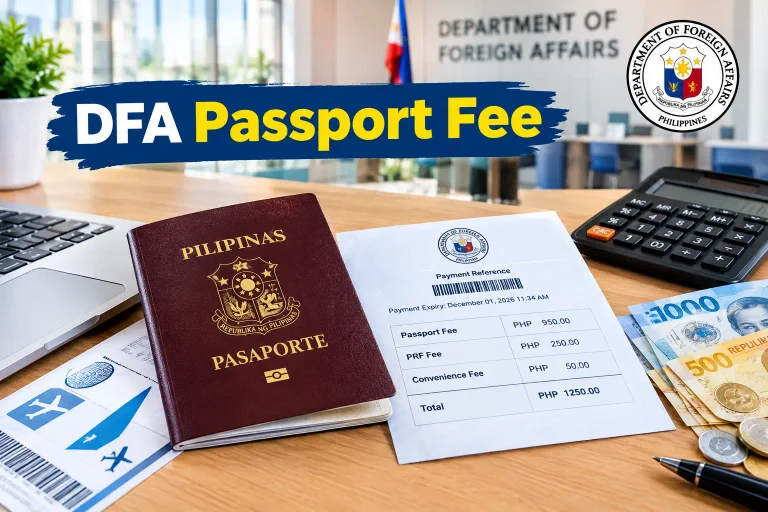
After confirming your appointment, you will receive a reference number and a payment deadline shown on your generated Payment Reference. Regular processing and expedited processing carry different fees, and a small convenience fee generally applies through the Online Appointment System. Pay within the deadline shown, since missing it can release your slot back into the system
Visit the DFA Office
Arrive with your printed application form, original documents, and photocopies organized and ready. Personal appearance is required for passport applicants, including minors, although the accompanying-parent or guardian requirements differ by age and circumstance.
Complete Biometrics and Verification
At the counter, staff will verify your documents, capture your photo, and take your fingerprints. This is the step that formally establishes your identity within the DFA’s system for all future passport transactions. The process itself usually takes only a few minutes once your documents pass verification.
What Happens After Your Application
Once your appointment is complete, your passport moves into production, and a separate timeline takes over from here.
Passport Processing Time
According to the DFA’s official passport FAQ, regular processing takes 10 working days for applications made at Metro Manila consular offices and 12 working days for applications outside Metro Manila. Expedited processing takes 5 working days in Metro Manila and 7 working days outside Metro Manila. These timelines do not include courier delivery time. Processing during peak travel months can run longer than these standard figures, so your passport stub or receipt is the most reliable place to confirm the release date for your specific application.
Passport Release or Delivery
You can generally choose to pick up your passport in person or have it delivered through courier service for an added fee. After your application, refer to your passport stub or receipt for the scheduled release date. If you selected courier delivery, use the tracking number provided on your courier claim stub once your passport has been dispatched.
If the release date has passed with no update, contacting your chosen DFA branch directly is the most reliable next step.
Mistakes First-Time Applicants Should Avoid
A handful of avoidable errors account for most of the frustration first-time applicants experience.
Incorrect Personal Information
A name that does not match your birth certificate, a wrong birth date, or an incorrect place of birth can all trigger additional verification or delay your application. Reviewing your submitted details against your PSA documents before your appointment day catches most of these errors early.
Missing Documents
Forgetting a single photocopy, an expired ID, or an unclear birth certificate copy is enough to get you turned away at the counter. Organizing every original and photocopy into one folder the night before your appointment removes this risk almost entirely.
Arriving Late for Your Appointment
Being even a few minutes late can mean losing your slot for the day, depending on how your branch manages its queue. Arriving fifteen to twenty minutes early gives you a buffer for security checks, parking, and any last-minute document review.
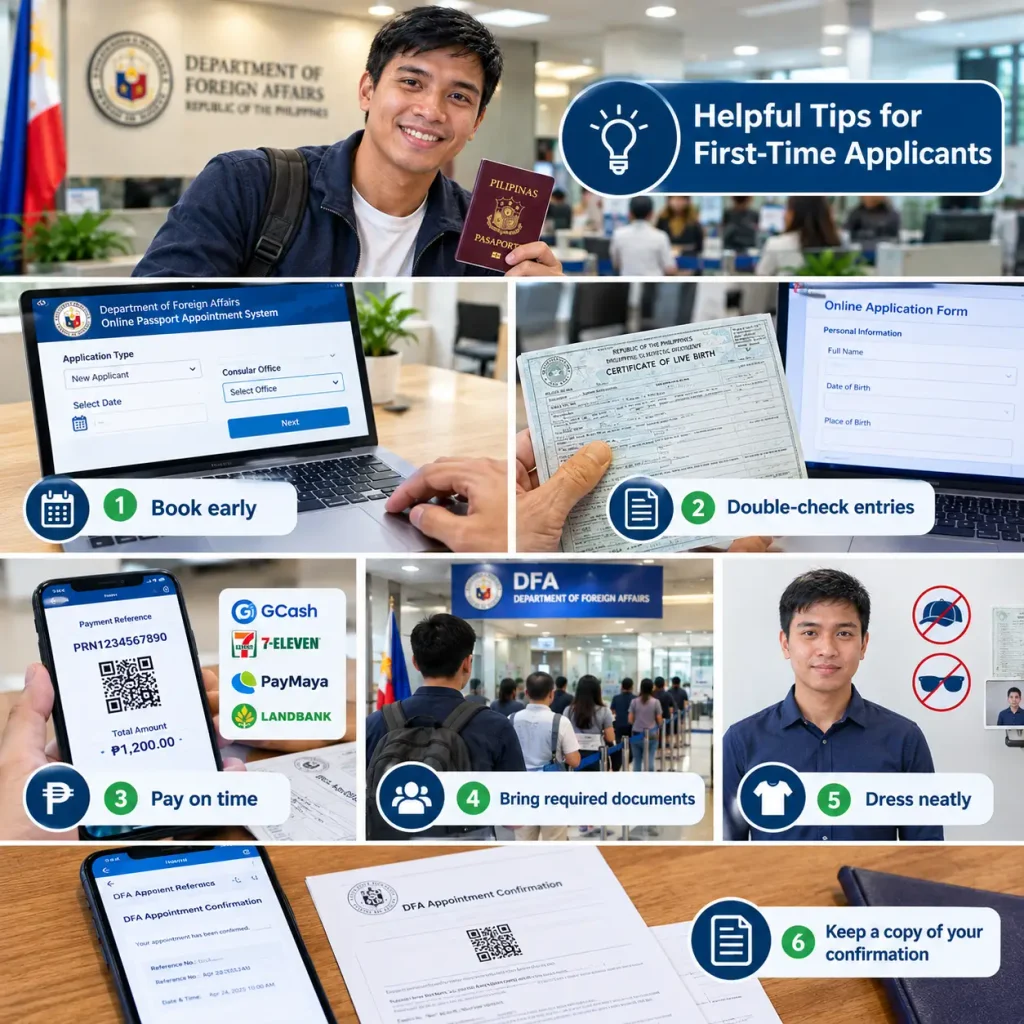
Helpful Tips for First-Time Applicants
Frequently Asked Questions
Final Thoughts
A first-time Philippine passport application is straightforward once you understand the sequence: gather your documents, book your appointment, submit accurate information, and show up prepared. Most of the frustration applicants experience traces back to a handful of avoidable issues, whether that is a mismatched name, a missing photocopy, or an expired ID. Taking the time to prepare properly before your appointment day is what turns this process from stressful into simple.