Damaged Passport Replacement DFA: Requirements, Fees & Process
A passport left in a jacket pocket during laundry day. A bag that got caught in the rain. A toddler who found your travel documents a little too interesting. Passport damage happens in ordinary, forgettable moments, but the fix is not something you can just tape over and hope for the best.
This guide covers exactly when a damaged passport needs replacing, what the DFA asks for, and how the process moves from appointment to release.
What Is Considered a Damaged Passport
Not every scuff or bent corner disqualifies a passport from use. The DFA draws a line between cosmetic wear and genuine damage that affects the document’s readability or security features.
Normal Wear vs. Passport Damage
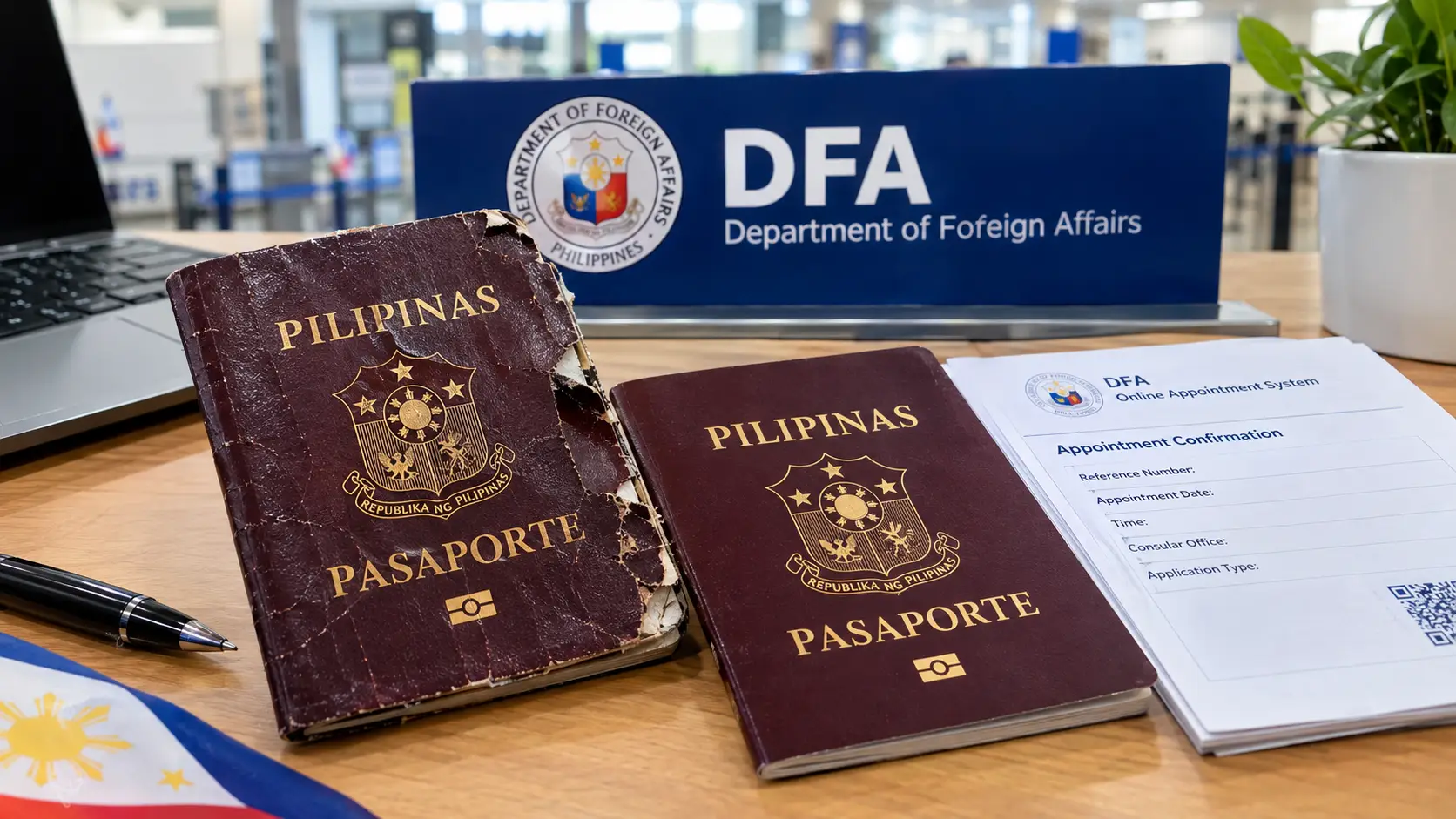
A passport with a slightly worn cover, faded lamination on the outside, or minor edge fraying from regular use generally still counts as valid. The issue becomes serious once the damage affects the biodata page, the barcode, the electronic chip, or any information that immigration officers need to read clearly. Water stains that blur text, torn pages, or a cracked chip all move a passport from “worn” into “damaged” territory.
Can You Still Travel With a Damaged Passport?
Airlines and immigration checkpoints can refuse a passport that looks tampered with or that has unreadable sections, even if it is technically still within its validity period. Damage to the chip in particular can cause issues at e-gates and automated immigration counters, since the chip stores the biometric data those systems read. If your passport shows any of the signs covered in this guide, it is safer to replace it before booking travel rather than risk being turned away at the airport.
Do You Need to Replace a Damaged Passport
Deciding whether your passport actually needs replacing comes down to a fairly specific set of conditions.
Replace Your Passport If It Has:
Water damage that has warped pages, blurred ink, or caused visible mold
A torn, cut, or otherwise physically compromised biodata page
A cracked, bent, or non-functioning electronic chip
Burn marks or fire damage affecting any readable section
Unauthorized markings, stamps, or alterations not made by an immigration authority
Pages that have become detached from the booklet’s binding
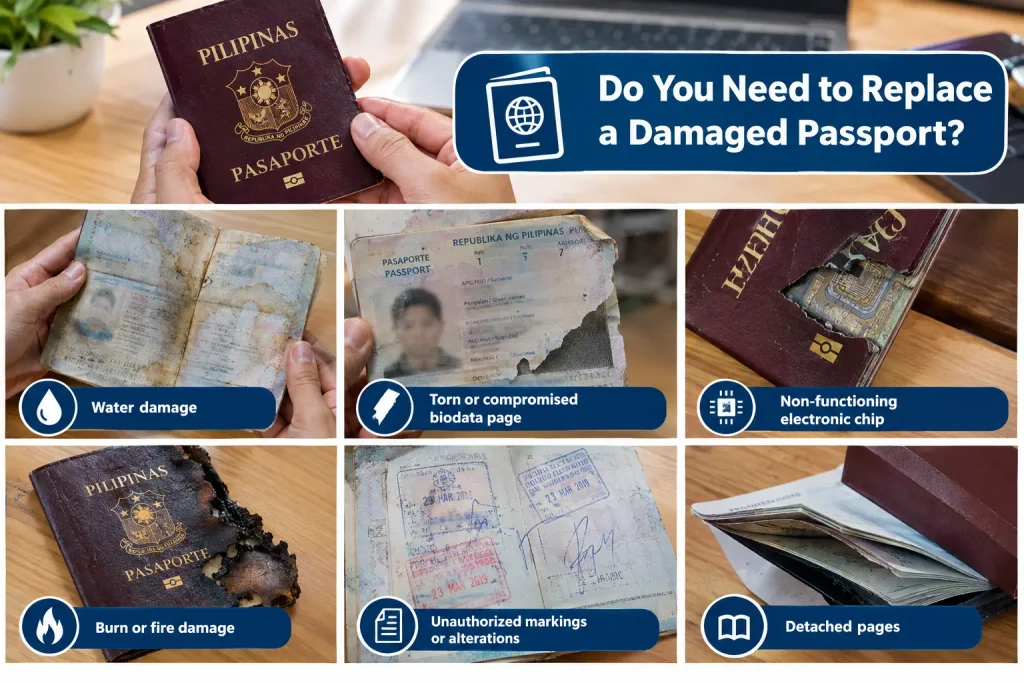
If your situation matches any of these, plan on applying for a replacement rather than continuing to use the document.
If you need to replace a damaged passport, reviewing the general Philippine passport application process can help you understand the steps involved.
DFA Requirements for Damaged Passport Replacement
The DFA treats a damaged passport replacement similarly to a new application in terms of documentation, with a few additions specific to the damage itself.
Required Documents
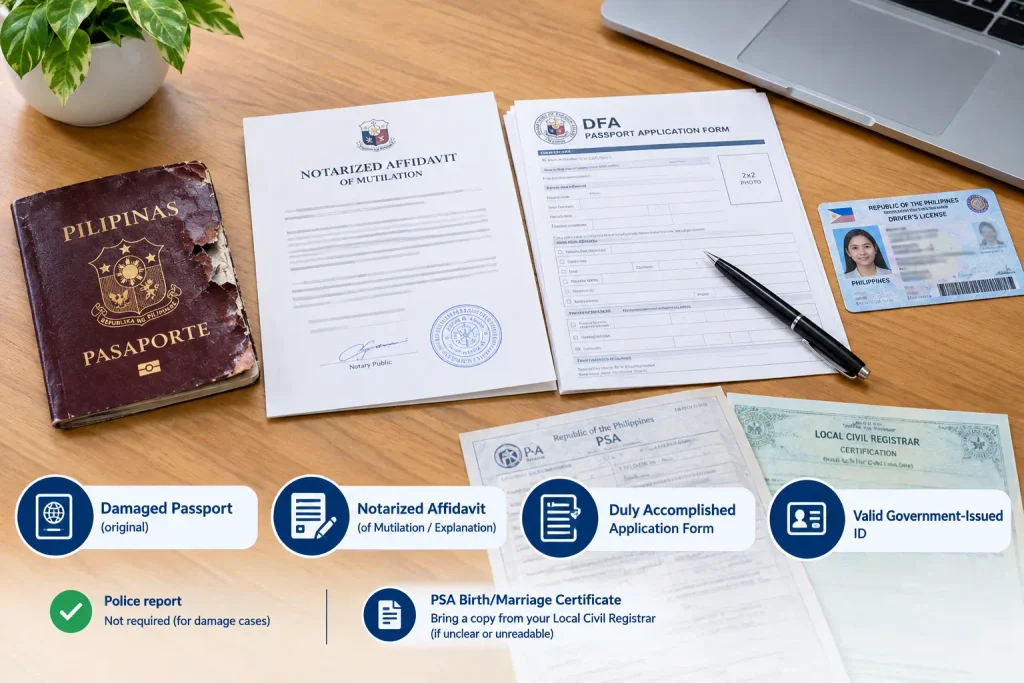
At minimum, you will need your damaged passport itself, a Notarized Affidavit of Mutilation or Explanation describing when and how the damage occurred, a duly accomplished application form, and a valid government-issued ID. Unlike a lost passport case, a police report is generally not required for damage, since the affidavit is the document that carries the weight of explanation here. If your PSA birth certificate or marriage certificate is unclear or unreadable, bring a copy from your Local Civil Registrar instead.
Document Preparation Checklist
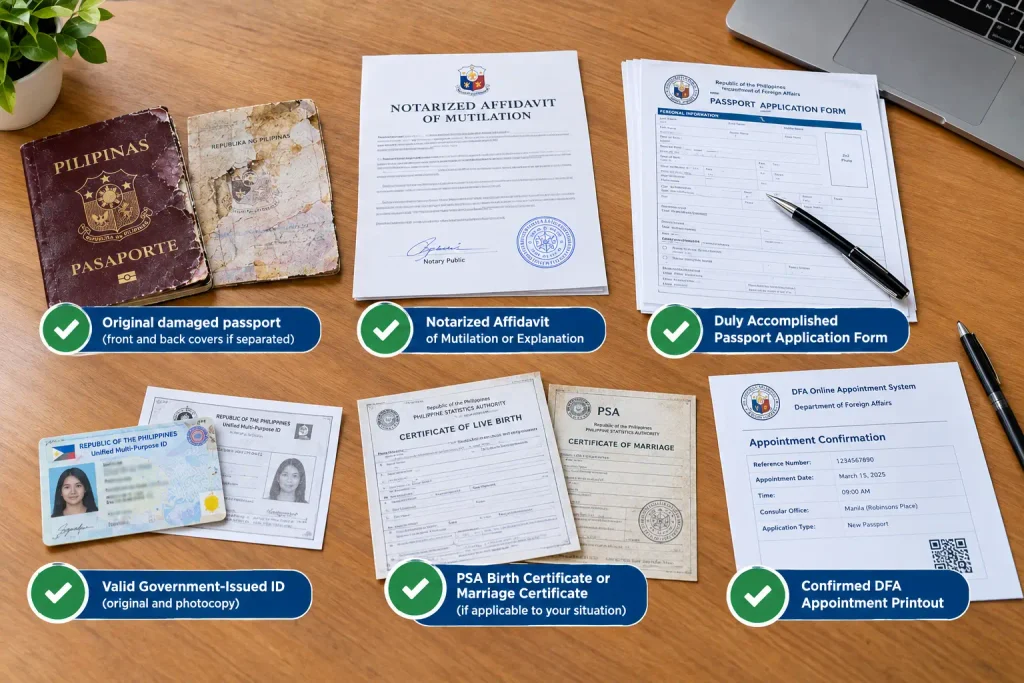
Original damaged passport, including both the front and back covers if separated
Notarized Affidavit of Mutilation or Explanation
Duly accomplished passport application form
Valid government-issued ID, original and photocopy
PSA birth certificate or marriage certificate, if applicable to your situation
Confirmed DFA appointment printout
Is It a Renewal or a New Application
This distinction matters because it changes both your required documents and your total fee.
Damaged Passport vs. Regular Renewal
A regular renewal assumes your existing passport is intact and simply expiring or already expired. A damaged passport replacement is processed under the same category as a new application, since the DFA needs to formally cancel the compromised document and reissue an entirely new one with fresh verification. This is why the affidavit requirement exists here but not in an ordinary renewal, and why an additional penalty fee applies on top of the standard processing cost.
How to Replace a Damaged Passport
The process follows a defined sequence, and skipping a step can send you back to the end of the line.
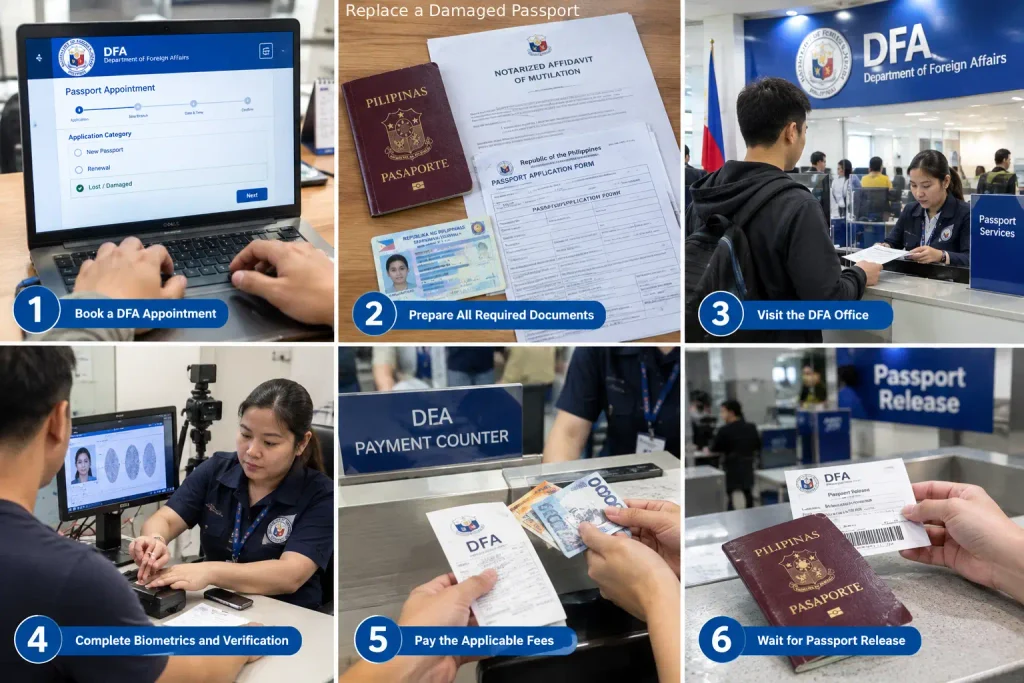
Book a DFA Appointment
Select the appropriate application category, generally “Lost/Damaged” or the closest equivalent option, when booking through the official passport appointment system. Choose your preferred branch and an available date, keeping in mind that Metro Manila slots tend to fill up fastest.
Prepare All Required Documents
Draft and notarize your Affidavit of Mutilation or Explanation before your appointment date, since this cannot be completed on the spot in most cases. Gather your damaged passport, your ID, and any supporting civil registry documents your situation requires.
Visit the DFA Office
Arrive with your printed application form, your damaged passport, and every supporting document organized and ready. Personal appearance is required, since the DFA needs to inspect the physical condition of your passport directly.
Complete Biometrics and Verification
Staff will review your documents, inspect the extent of the damage, and capture your updated photo and fingerprints. This step reestablishes your identity in the DFA’s system as part of reissuing a new passport.
Pay the Applicable Fees
Pay your regular or expedited processing fee along with the applicable penalty fee for a damaged passport. A small convenience fee generally applies as well, depending on your payment channel.
Wait for Passport Release
Damaged and mutilated passport applications may go through additional verification before your new passport is printed, since the DFA is confirming there are no outstanding issues tied to the old document. Refer to your passport stub or receipt for your specific release date once your application has been accepted.
Fees and Processing Time
A damaged passport replacement costs more than a standard renewal because of the added penalty fee tied to the lost or damaged category. On top of your regular or expedited processing fee, expect an additional penalty charge, plus any standard convenience fee your payment channel applies. Processing and verification for a damaged or mutilated passport can take longer than a routine renewal, since the DFA reviews the circumstances described in your affidavit before finalizing your new passport. Before proceeding, review the relevant passport requirements and confirm which documents are needed for your specific case. Confirm the exact fees and estimated timeline shown during your own booking and payment process, since these details can be adjusted and can vary by branch or Foreign Service Post.
Common Damage Scenarios
Certain situations come up often enough to deserve their own quick notes.
A passport soaked in a washing machine or caught in heavy rain typically shows warped pages and blurred ink, which almost always qualifies for replacement. A passport chewed by a pet or torn by a small child usually damages the physical booklet structure, even when the biodata page itself looks intact, and is generally still treated as damage requiring replacement. A passport that ran out of blank pages is handled differently, since the Philippine passport booklet has a fixed 44-page format and additional pages cannot be inserted, meaning a renewal rather than a damage claim is the appropriate route in that specific case.
Quick Replacement Checklist
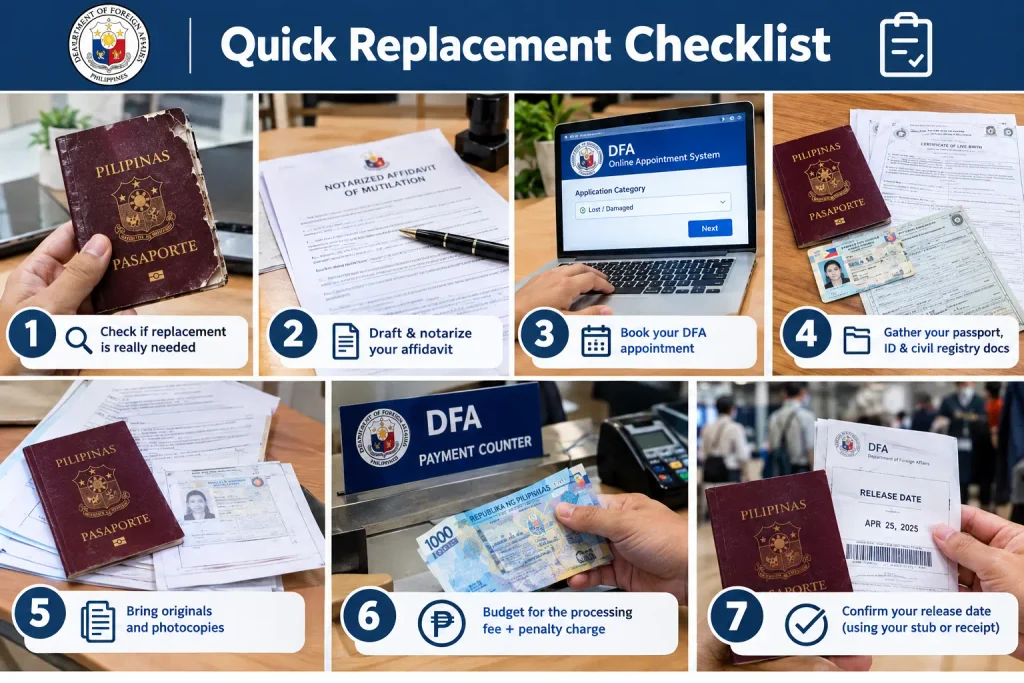
Confirm your passport’s damage genuinely requires replacement rather than being cosmetic wear
Draft and notarize your Affidavit of Mutilation or Explanation before your appointment
Book your DFA appointment under the appropriate application category
Gather your damaged passport, ID, and any required civil registry documents
Bring both originals and photocopies of every document
Budget for the standard processing fee plus the applicable penalty charge
Confirm your release date using your passport stub or receipt once your application is accepted
Frequently Asked Questions
Final Thoughts
Replacing a damaged passport takes a bit more paperwork than a routine renewal, mainly because of the affidavit and the added penalty fee, but the overall process still follows a familiar DFA structure. Knowing whether your damage genuinely warrants a replacement, preparing your notarized affidavit ahead of time, and budgeting for the extra fee are what keep this process from turning into a frustrating back-and-forth. Once your documents are in order, the rest of the visit runs much like any other passport appointment.