DFA Passport Fee: Price Guide by Applicant Type
You open the DFA appointment page. You pick a slot. Then a payment screen shows up, and suddenly you are staring at numbers you did not expect. A convenience fee here. A courier charges there. A penalty you never heard about until now.
This confusion is common. Filipino applicants often budget only for the base passport fee. They forget the extras. Then payment day brings a surprise total.
This guide breaks the entire cost down. You will see the exact current fees. You will see what each fee actually pays for. You will also get a simple budget planner so nothing catches you off guard.
Current DFA Passport Fees
The Department of Foreign Affairs charges a standard processing fee for every passport application. This fee applies whether you are a first-time applicant or renewing an old passport. The amount depends only on your chosen processing speed, not on your applicant type.
Fees at a Glance
Here is the current base pricing structure for a Philippine passport.
- Regular processing: ₱950
- Expedited processing: ₱1,200
- Lost or damaged passport penalty: ₱350 (added on top of regular or expedited fees)
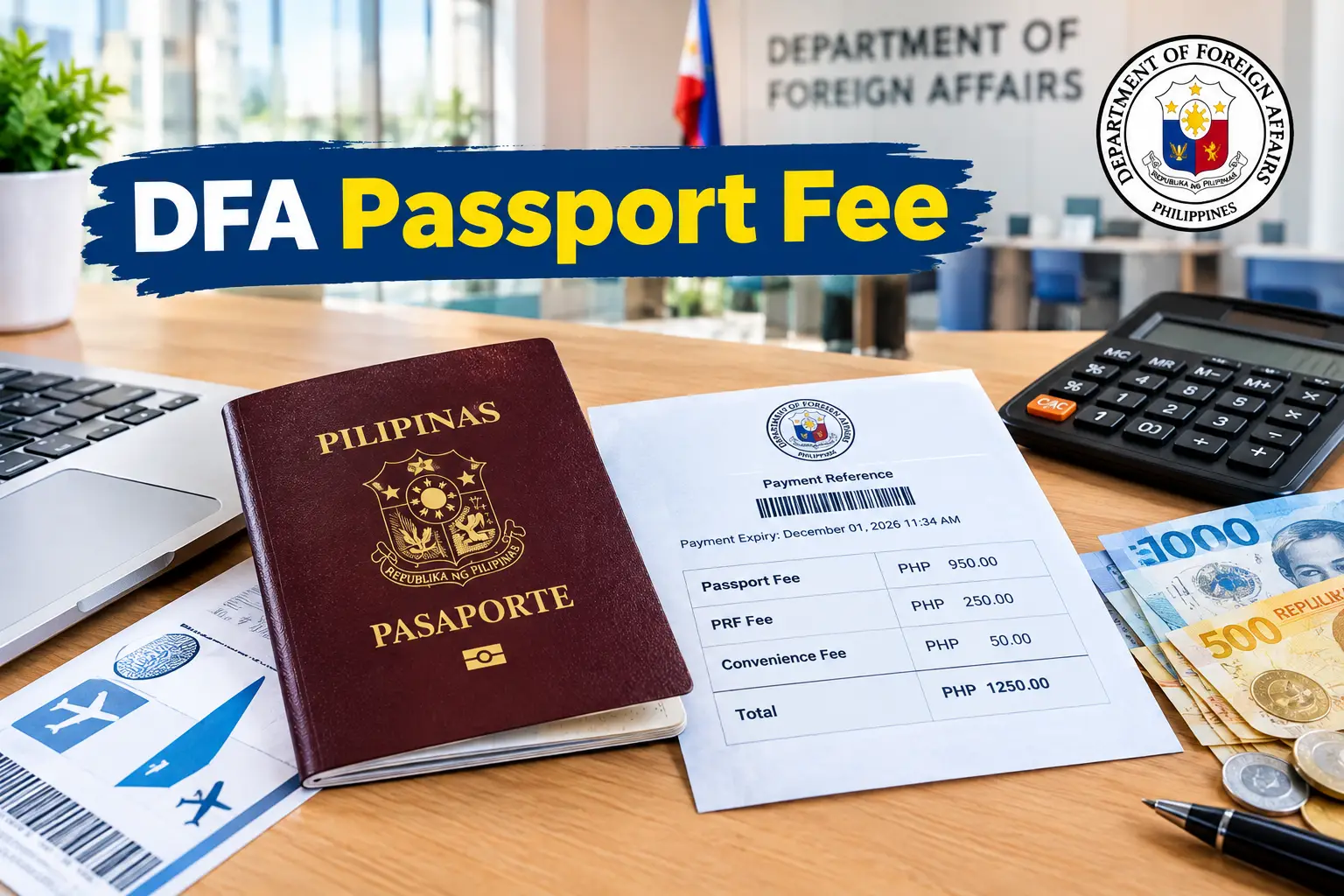
- Payment center convenience fee: ₱50 (for applications made through the Online Appointment System)
- PRF (Passport Revolving Fund) fee: Up to ₱250, which may also appear on your payment screen depending on your application
- Courier delivery fee: Varies by provider and location
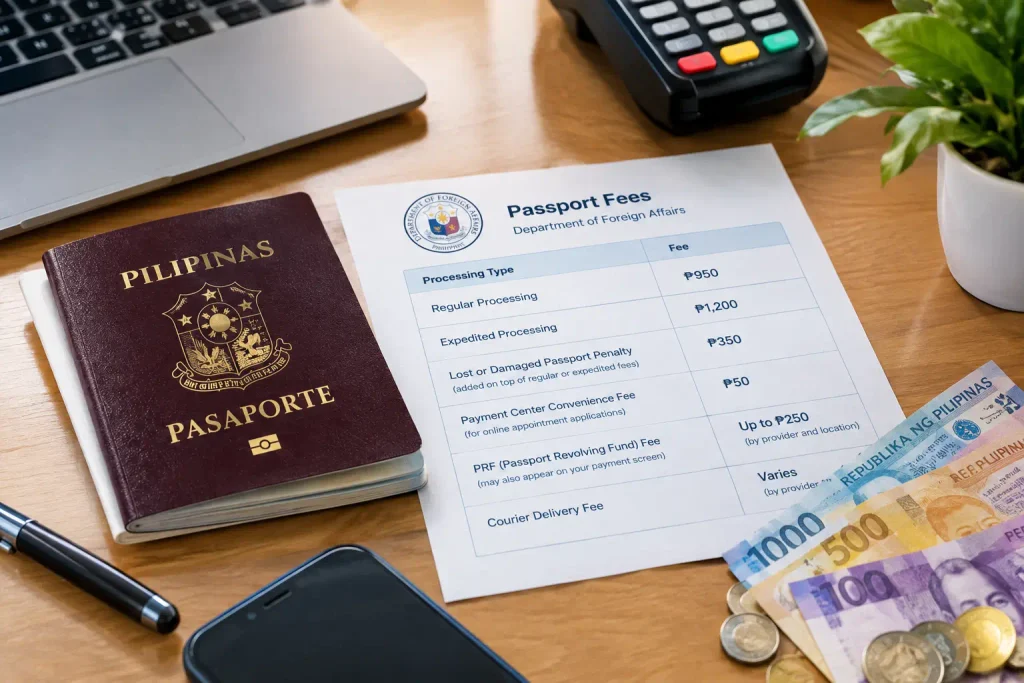
These figures reflect the base structure commonly published across DFA-related fee guides. Fees, and which charges apply to your specific transaction, can vary, so always review the full breakdown shown on your own payment screen before confirming.
Why the Fee Stays the Same for Most Applicants
New applicants and renewing applicants pay the exact same processing fee. The DFA does not charge extra just because it is your first passport. What changes between applicant types is the paperwork, not the price. A first-time applicant needs a birth certificate. A renewing applicant needs an old passport. The fee itself stays identical.
Which Passport Fee Applies to You
Your total cost depends on your specific situation, not just your processing choice. Here is how the fee breaks down by applicant category.
First-Time Applicants
A first-time applicant pays the standard regular or expedited fee. No additional charge applies simply because this is your first passport. First-time applicants generally need additional supporting documents, such as a PSA birth certificate, depending on their circumstances, and these come with their own separate costs outside the DFA fee itself.
Renewal Applicants
Renewing an existing passport costs the same base fee as a first-time application. This holds true even if your old passport expired years ago. The only difference is your required documents, which are lighter for renewal than for a first-time application.
Lost or Damaged Passport Applicants
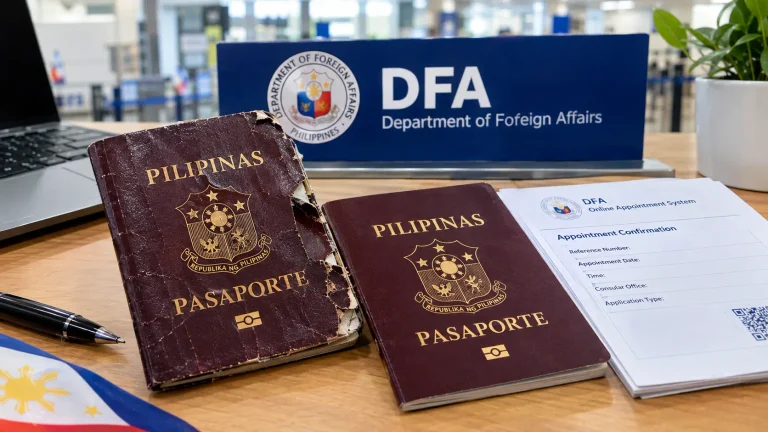
Replacing a lost or damaged passport adds a ₱350 penalty on top of your chosen processing fee. This brings your total to ₱1,300 for regular processing or ₱1,550 for expedited processing. You will also need a notarized affidavit of loss, and in many cases a police report, which can carry their own small costs outside the DFA fee itself.
Applicants Abroad
Filipinos applying through an embassy or consulate pay the applicable passport fee set by that specific post, in the local currency used there. Always check your post’s current published schedule of fees before booking.
Minors
Minor applicants pay the same processing fee structure as adults inside the Philippines. There is no separate discounted rate for children under the standard domestic schedule. Parents should still budget for the accompanying documents a minor application requires, such as school records or notarized consent forms.
What Does the DFA Passport Fee Cover
Your base passport fee pays for the entire government processing pipeline behind your travel document. Understanding what this includes helps you see exactly where your money goes.
Application processing and identity verification
Biometric capture, including your photo and fingerprints
Printing and binding of your physical passport booklet
Standard security features embedded in the document
Your chosen processing speed, either regular or expedited
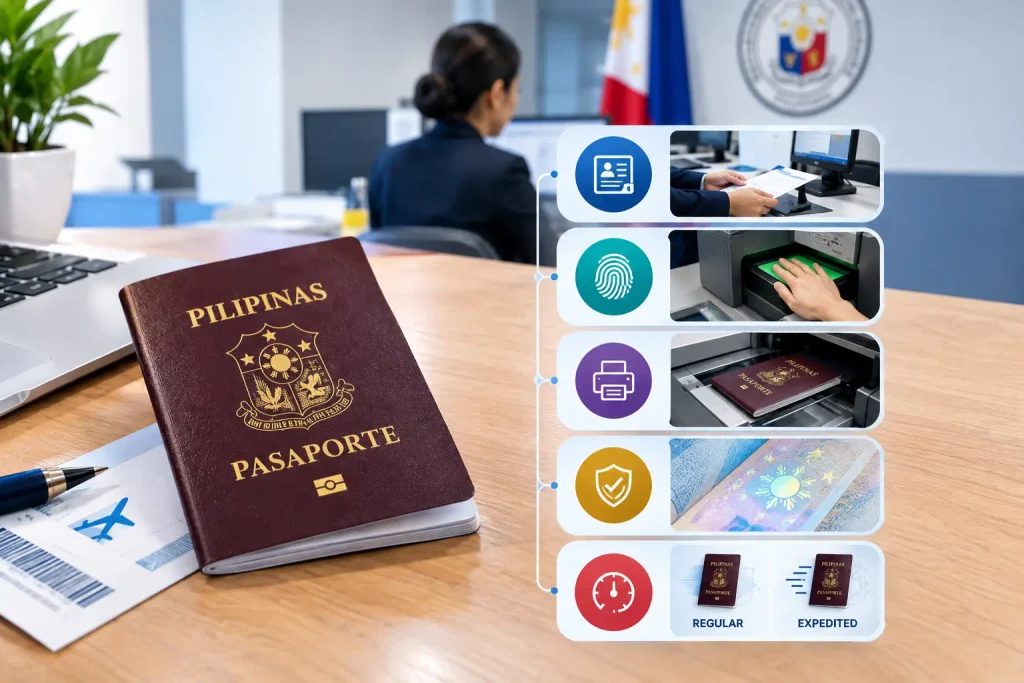
This fee does not include pickup or delivery logistics. Those come as separate optional charges, which the next section explains in detail. Before paying the applicable fees, make sure you understand the Philippine passport application process and the steps involved in submitting your application.
What Is Not Included in the Passport Fee
Several common costs sit outside your base DFA fee. Missing these during budgeting is the main reason applicants feel surprised at the payment screen.
Optional Courier Delivery
Picking up your passport at the DFA office is free. Choosing home or office delivery instead adds a courier charge. This fee depends on your delivery provider and your location within the country, and it can differ noticeably from one address to another. Treat any specific peso figure you see for courier delivery as an estimate only, and rely on the exact amount displayed during your own booking and payment.
Convenience Fee at Payment Centers
Most payment channels add a small convenience fee on top of your base processing cost. A ₱50 convenience fee applies to applications made through the Online Appointment System, and other charges, such as a PRF fee, may also appear depending on your payment or appointment process. The DFA itself does not keep the convenience fee. Your payment provider collects it for handling the transaction.
Supporting Document Costs
Your passport fee never includes the cost of preparing your supporting documents. A PSA birth certificate has its own price. A notarized affidavit has its own notarial fee. Photocopying and printing also add small, easy-to-forget costs.
Penalty Fees for Special Cases
A lost or mutilated passport carries its own ₱350 penalty, separate from your regular processing charge. This penalty applies regardless of whether you choose regular or expedited service.
Regular vs Expedited Processing
Choosing between regular and expedited processing affects both your total cost and your waiting time. Here is a general comparison, though exact release timelines can differ slightly depending on your branch and current application volume.
| Processing Type | Base Fee | Typical Release Estimate |
| Regular | ₱950 | Around 10 to 12 working days |
| Expedited | ₱1,200 | Around 5 to 7 working days |
Timelines outside Metro Manila tend to run at the longer end of these ranges. These figures do not include courier delivery time. Your official confirmation email is the most reliable place to check the estimated release date for your specific application.
Which One Should You Choose
Expedited processing costs ₱250 more than regular processing. This price difference generally results in a shorter release timeline than regular processing, though the exact gap depends on your location and branch. If you have a confirmed flight or a visa deadline approaching, expedited processing is usually worth the extra cost. If your travel plans sit months away, regular processing saves you money with no real downside.
How to Pay Your DFA Passport Fee
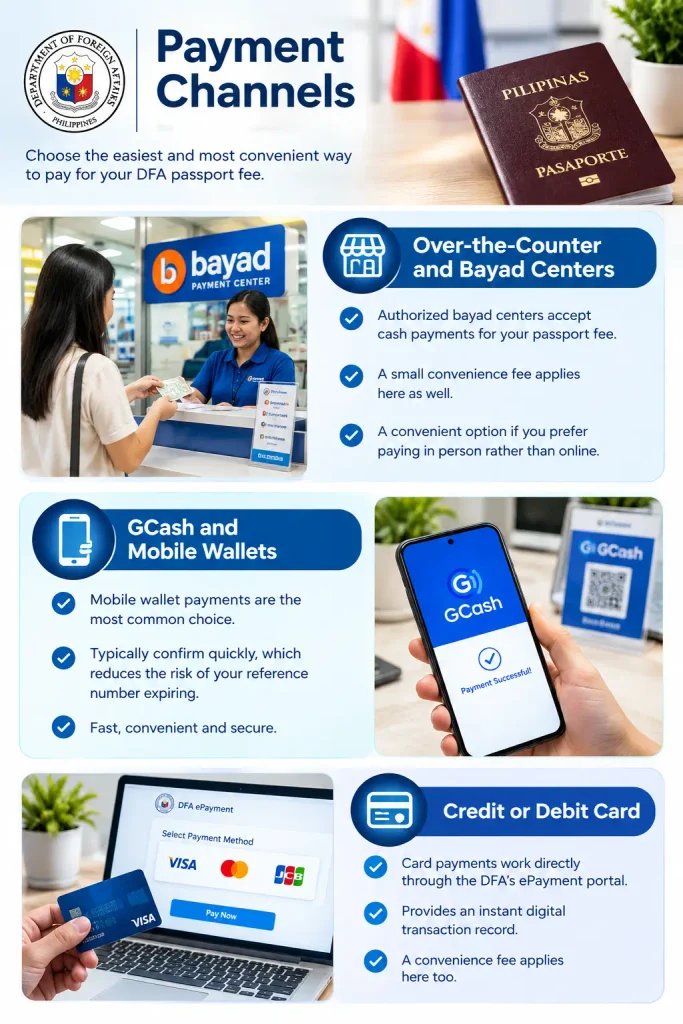
The DFA accepts several payment methods through its online booking system. Choosing the right channel affects both your convenience fee and how quickly your payment gets confirmed.
Payment Channels
Over-the-Counter and Bayad Centers
Authorized bayad centers accept cash payments for your passport fee. This option suits applicants who prefer paying in person rather than online. A small convenience fee applies here as well.
GCash and Mobile Wallets
Mobile wallet payments have become the most common choice for many applicants. GCash payments typically confirm quickly, which reduces the risk of your reference number expiring before payment clears.
Credit or Debit Card
Card payments work directly through the DFA’s ePayment portal. This method suits applicants who prefer an instant digital transaction record. A convenience fee applies here too, similar to other electronic channels.
Payment Deadline and Non-Refundable Policy
Pay within the payment deadline shown on your generated Payment Reference. If payment is not completed within the allowed period, the transaction may expire, and you may need to make a new appointment. Once your fee is paid and processed, it is generally non-refundable, even if you later decide not to proceed with your appointment. Reading your confirmation details carefully before submitting payment protects you from this kind of loss. For applications involving children, check the guide to DFA passport appointments for minors to understand the additional requirements that may apply.
Should You Choose Courier Delivery
Courier delivery adds convenience but also adds cost. Deciding whether it makes sense for you depends on your schedule and your location.
Pros of Courier Delivery
When Picking Up In Person Makes More Sense
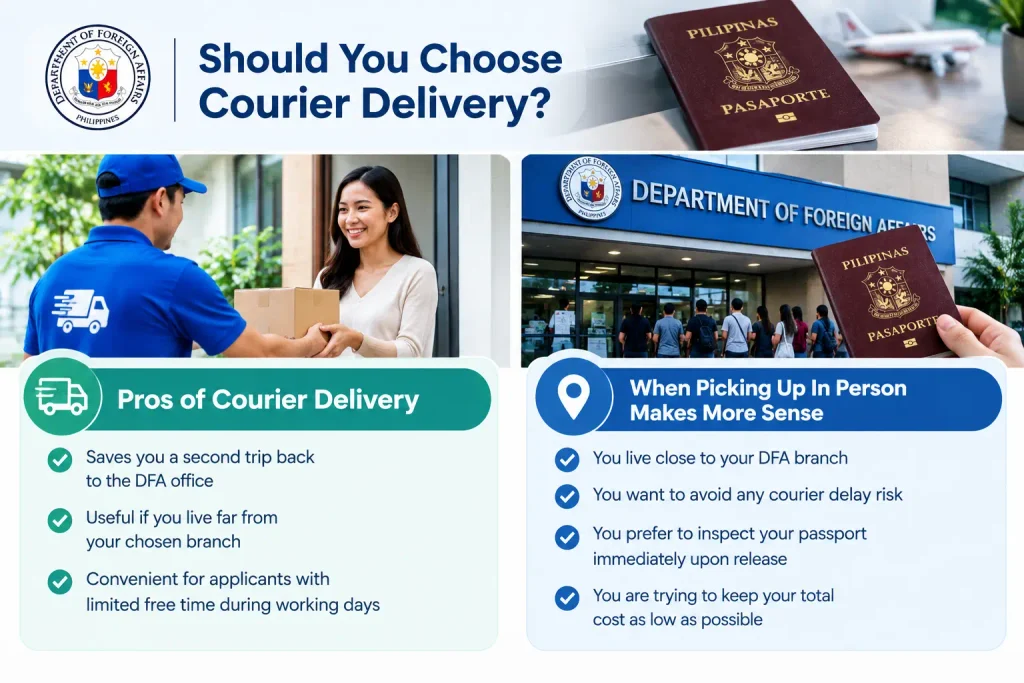
Courier delivery timelines sit on top of your regular processing timeline. If your travel date is tight, personal pickup often removes one layer of uncertainty from your plans.
Passport Fee Budget Planner
Use this planner to estimate your realistic total cost before you book your appointment. A PRF fee of up to ₱250 may also appear on your specific payment screen, so treat these as starting estimates rather than guaranteed totals.
Scenario 1: First-time applicant, regular processing, pickup in person
Base fee: ₱950
Convenience fee: ₱50
Possible PRF fee: up to ₱250
Estimated
total: ₱1,000 to ₱1,250
Scenario 2: Renewal applicant, expedited processing, with courier delivery
Base fee: ₱1,200
Convenience fee: ₱50
Possible PRF fee: up to ₱250
Courier fee: varies by provider and location
Estimated total: ₱1,250 and up, plus courier cost
Scenario 3: Lost passport replacement,
regular processing
Base fee: ₱950
Penalty fee: ₱350
Convenience fee: ₱50
Possible PRF fee: up to ₱250
Estimated
total: ₱1,350 to ₱1,600
Scenario 4: Lost passport replacement, expedited processing, with courier
Base fee: ₱1,200
Penalty fee: ₱350
Convenience fee: ₱50
Possible PRF fee: up to ₱250
Courier fee: varies by provider and location
Estimated total: ₱1,600 and up, plus courier cost
These figures are planning estimates only. Confirm your exact total, including whether a PRF fee applies to your transaction, on the payment screen during your own booking.
Frequently Asked Questions
Final Thoughts
Your DFA passport fee is simpler than it first appears once you separate it into clear parts. The base fee stays the same across most applicant types. Your total cost changes only through your processing speed, any penalty charges, your payment channel, and whether you add courier delivery. Planning around these categories before you book removes the guesswork from payment day.