Dual Citizenship Passport Application Philippines: Requirements & DFA
You took your Oath of Allegiance. You have your Identification Certificate in hand. Now you are staring at a passport application form wondering which of your documents actually matters for this next step. Dual citizens face a slightly different paperwork trail than a typical renewal, and mixing up the requirements is an easy way to lose an appointment slot.
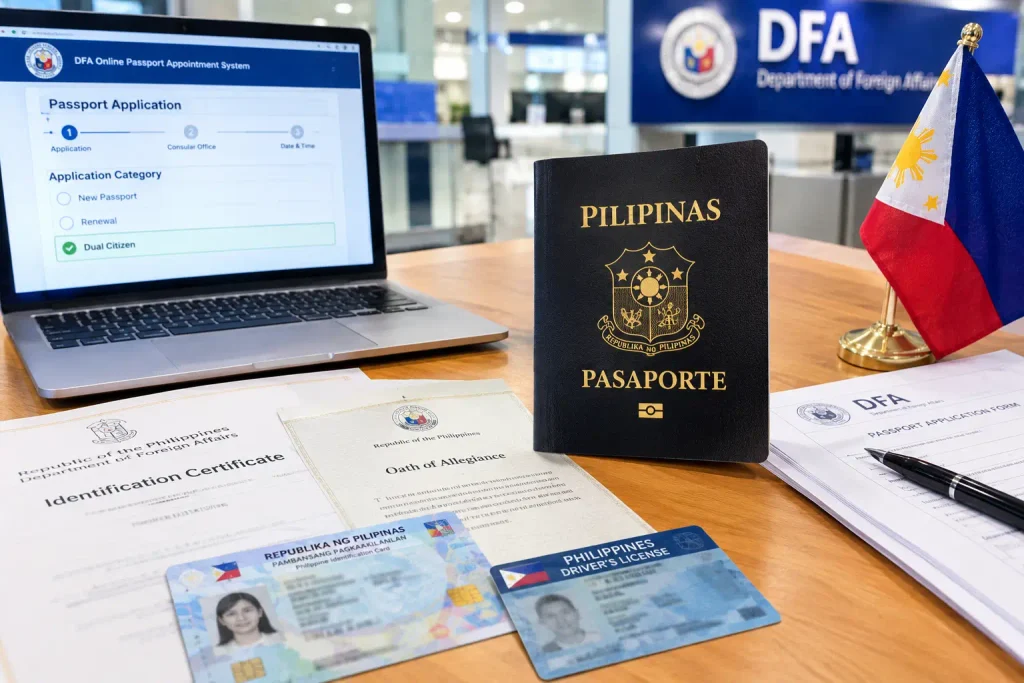
This guide walks through exactly who qualifies, which category of dual citizen you fall under, and how the passport application moves from your reacquired citizenship documents to a finished Philippine passport.
Who Can Apply for a Philippine Passport as a Dual Citizen
Anyone who holds Filipino citizenship alongside another nationality can generally apply for a Philippine passport, but the path to that eligibility differs depending on how the dual citizenship was acquired. The most common route involves natural-born Filipinos who became citizens of another country and later reacquired or retained their Philippine citizenship under Republic Act No. 9225. A second, separate group consists of children born abroad to at least one Filipino parent, who may hold dual citizenship from birth under the principle of jus sanguinis combined with the foreign country’s own citizenship laws.
Completing the underlying citizenship process comes first. You generally need your Identification Certificate, Order of Approval, or equivalent recognition document already in hand before the DFA will process your passport application, since this proves your Filipino citizenship status to begin with.
Types of Dual Citizens
Understanding which category applies to you determines exactly which documents you will need later in this guide.
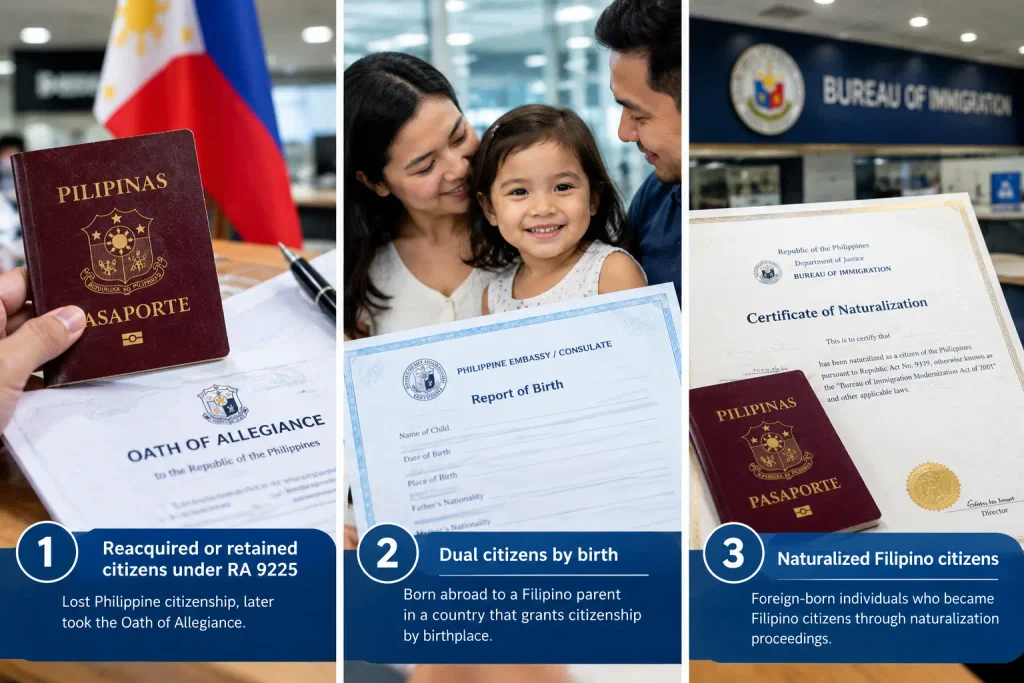
Reacquired or retained citizens under RA 9225
are natural-born Filipinos who lost their Philippine citizenship by naturalizing in another country and later took the Oath of Allegiance to restore it. This is the most common dual citizenship scenario among adult applicants.
Dual citizens by birth
are children born outside the Philippines to at least one Filipino parent, in a country that also grants citizenship based on birthplace. These applicants generally need a Report of Birth registered through a Philippine Embassy or Consulate rather than going through the RA 9225 oath process.
Naturalized Filipino citizens
are foreign-born individuals who became Filipino citizens through naturalization proceedings rather than through reacquisition or birthright. This group is documented differently from RA 9225 applicants and generally needs a Certificate of Naturalization from the Bureau of Immigration.
Do You Need Dual Citizenship Before Applying
Yes. You must complete the underlying citizenship process before the DFA will accept your passport application as a dual citizen. Attempting to apply before your Identification Certificate and Order of Approval are issued generally means your application cannot proceed, since the DFA has no basis yet to confirm your Filipino citizenship.
Eligibility Guide
Use this quick check to confirm where you stand before booking your appointment.
If you have already taken your Oath of Allegiance and received your Identification Certificate and Order of Approval, you are ready to apply for your passport.
If you are still in the process of reacquiring citizenship under RA 9225 but have not yet completed the oath, you generally need to finish that process first.
If you were born abroad to a Filipino parent and have not yet registered a Report of Birth with a Philippine Embassy or Consulate, that registration typically needs to happen before your passport application.
If you are unsure which category applies to you, reviewing your specific documents against the categories above, or confirming directly with your nearest Philippine Foreign Service Post, is the safest next step.
DFA Requirements for Dual Citizen Passport Applications
Once your citizenship status is established, your passport application follows a structure similar to other applicants, with a few category-specific additions.
Basic Requirements
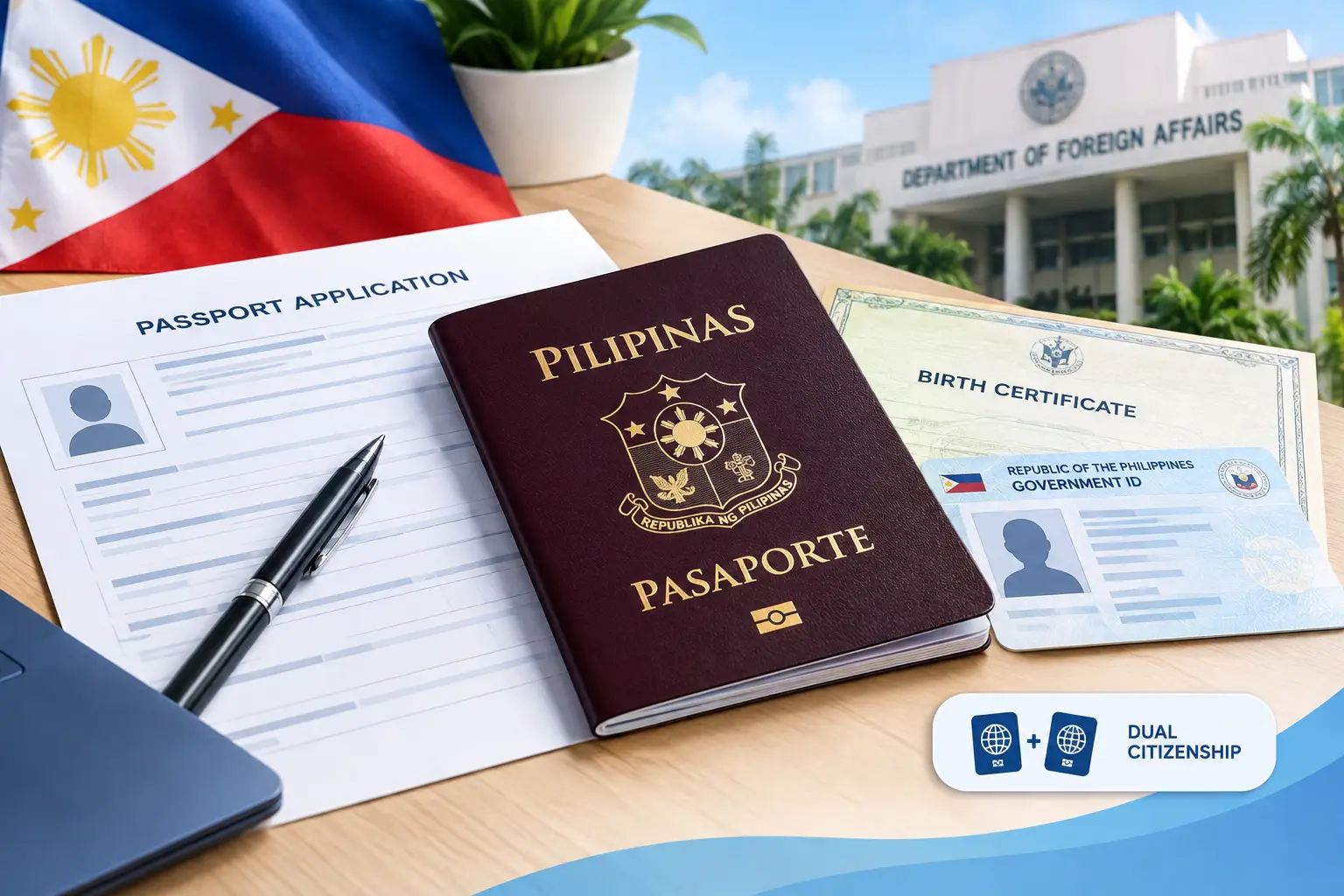
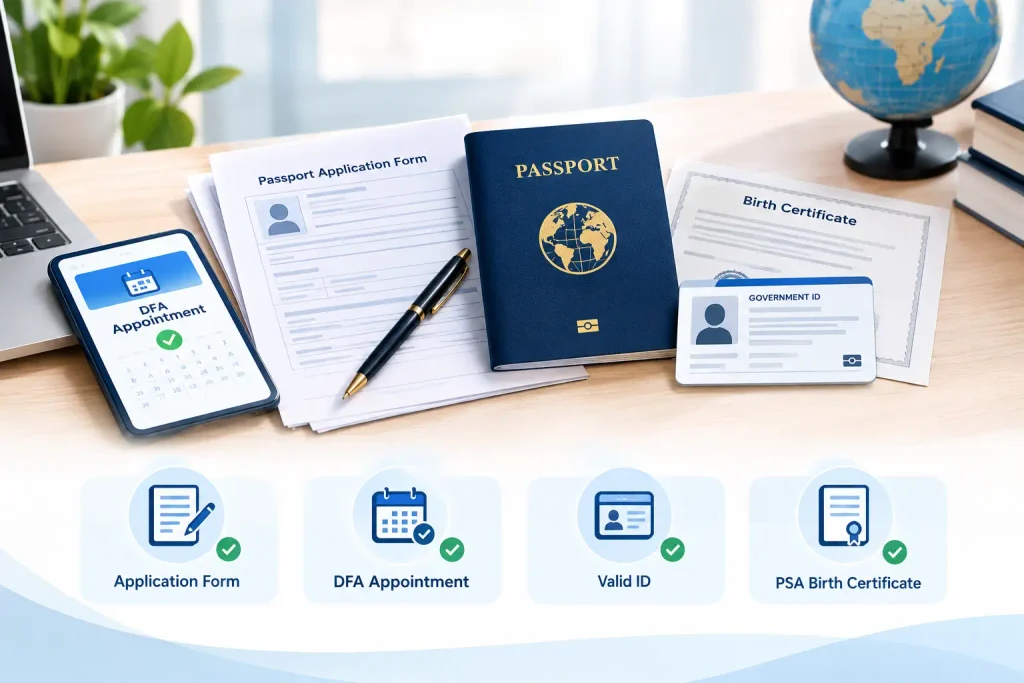
At minimum, every dual citizen applicant needs a duly accomplished application form, a confirmed DFA appointment, a valid government-issued ID, and their PSA-issued birth certificate or equivalent civil registry document. For a broader overview of the process, read our guide to Philippine passport applications before preparing your application. Your name across every document needs to match exactly, since the DFA generally cannot issue a passport with a name that does not align with your PSA records, regardless of what appears on your citizenship documents.
Additional Documents for Dual Citizens
For applicants who reacquired or retained citizenship under RA 9225, bring the original and a photocopy of your Identification Certificate, Order of Approval, and Oath of Allegiance issued by a Philippine Foreign Service Post or the Bureau of Immigration. For naturalized citizens, bring the original and photocopy of your Certificate of Naturalization from the Bureau of Immigration instead. For dual citizens by birth, bring your PSA-issued Report of Birth on security paper, since this document establishes your citizenship in place of a standard local birth certificate.
If your name has changed due to marriage or a legal correction, additional documents may be required to reconcile the discrepancy. This can include a PSA marriage certificate, an annotated birth certificate under RA 9048 or RA 10172 for clerical corrections, or a court order for a formal legal name change, depending on your specific situation.
Which Process Applies to You
Your specific document set depends on your dual citizenship category, so confirming this before booking saves you from an incomplete application.
Before Booking Your Appointment
Gather every document tied to your citizenship category first, since these generally cannot be substituted with something else at the counter. Double-check that your name spelling matches across your citizenship documents, your ID, and your PSA records, since a mismatch here is one of the most common reasons dual citizen applications stall. If you are applying on behalf of a minor who derives citizenship through a dual citizen parent, review the specific requirements for derivative applications, since these generally include the parent’s own Identification Certificate and Order of Approval alongside the child’s documents.
How to Apply for a Philippine Passport as a Dual Citizen
Once your documents are ready, the application itself follows a defined sequence.
Book a DFA Passport Appointment
Visit the official passport appointment website and select the application type that fits your situation. If you are applying from abroad, this may go through your nearest Philippine Embassy or Consulate rather than a domestic DFA branch.
Organize Your Documents
Arrange your citizenship documents, your ID, your PSA birth certificate, and any name-correction paperwork into one folder, with both originals and photocopies included. Missing a single required photocopy is a common reason applicants get sent back for a second visit.
Attend Your DFA Appointment
Arrive with your printed application form and every required document. Personal appearance is required, since the DFA needs to verify your identity directly regardless of your citizenship category.
Complete Biometrics
Staff will capture your photo and fingerprints as part of standard passport processing. This step applies to dual citizen applicants the same way it applies to any other passport applicant.
Pay the Passport Fee
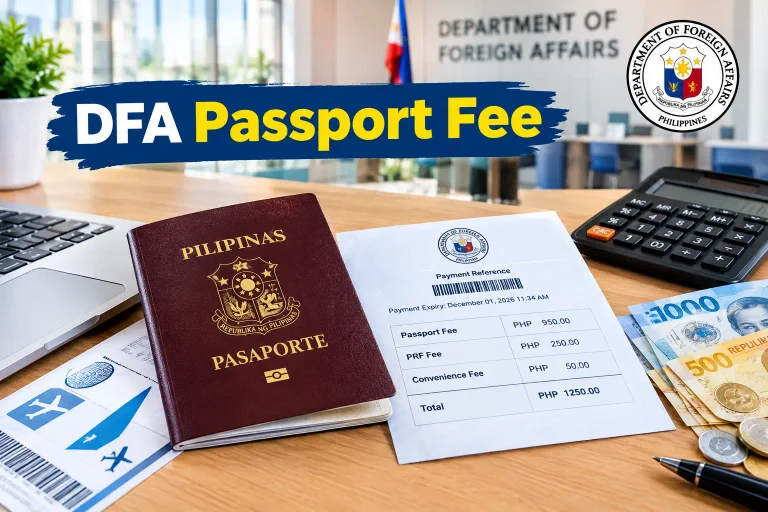
Pay your regular or expedited processing fee, along with any applicable convenience fee for your chosen payment channel. Fees for dual citizen applicants generally follow the same schedule as standard applications, unless your situation involves an additional category, such as a lost or damaged passport replacement.
Wait for Passport Release
Once your application is accepted, refer to your passport stub or receipt for your estimated release date. Processing for a first passport application under dual citizenship may take a bit longer in some cases, since the DFA verifies your citizenship documents alongside your other application details.
Fees and Processing Time
Dual citizen applicants generally pay the same regular and expedited processing fees as any other passport applicant, since dual citizenship itself does not carry a separate passport fee category. Processing timelines also generally follow the standard schedule, though applications with additional verification needs, such as unresolved name discrepancies, can take longer to finalize. Confirm your specific fees and estimated timeline on your payment screen and confirmation email, since these can vary depending on whether you are applying domestically or through a Foreign Service Post abroad. You should also review the applicable passport requirements and confirm which documents apply to your citizenship status.
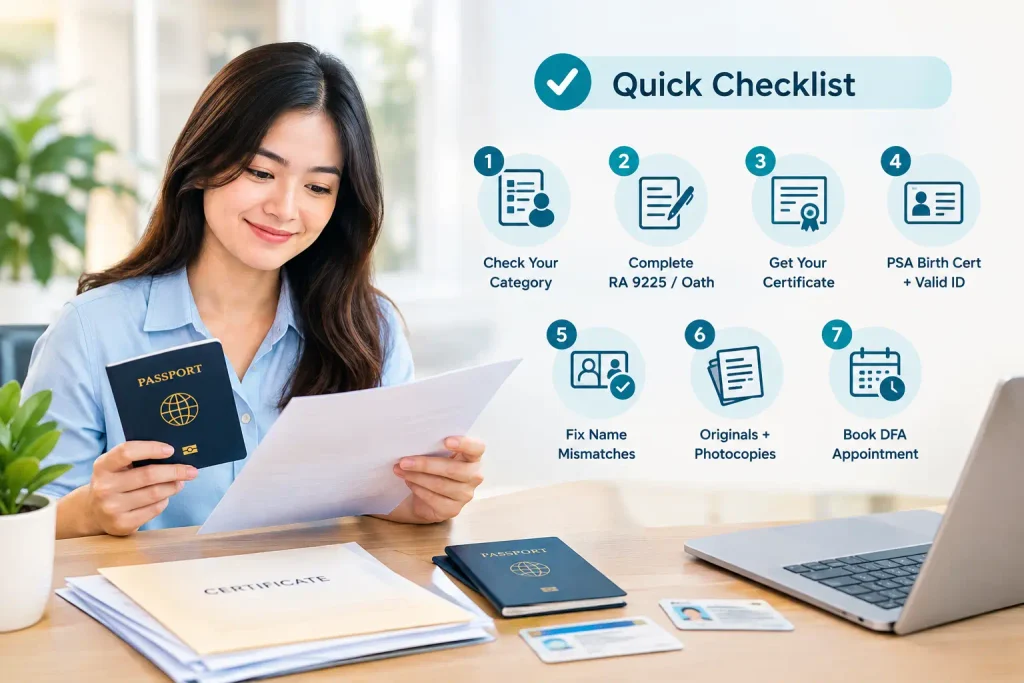
Quick Dual Citizen Passport Checklist
Frequently Asked Questions
Final Thoughts
Applying for a Philippine passport as a dual citizen comes down to knowing which category you fall under and having the right citizenship documents ready before you book your appointment. Whether you reacquired citizenship under RA 9225, hold dual citizenship from birth, or became a naturalized Filipino, the passport process itself follows a familiar DFA structure once your underlying citizenship status is established. Taking the time to confirm your documents and resolve any name mismatches beforehand is what keeps this process moving smoothly.