DFA Apostille Appointment: How to Book Online, Requirements & Fees
Needing your diploma, NBI clearance, or birth certificate authenticated for use abroad usually means one thing: a DFA apostille appointment. Whether you are preparing documents for a work visa, a foreign university, or an immigration application, the apostille process only moves forward once you have a confirmed slot and the right paperwork in hand.
This guide covers who needs an apostille, what documents typically qualify, how to book online, and how to avoid the small mistakes that send applicants back for a second visit.
What Is a DFA Apostille Appointment
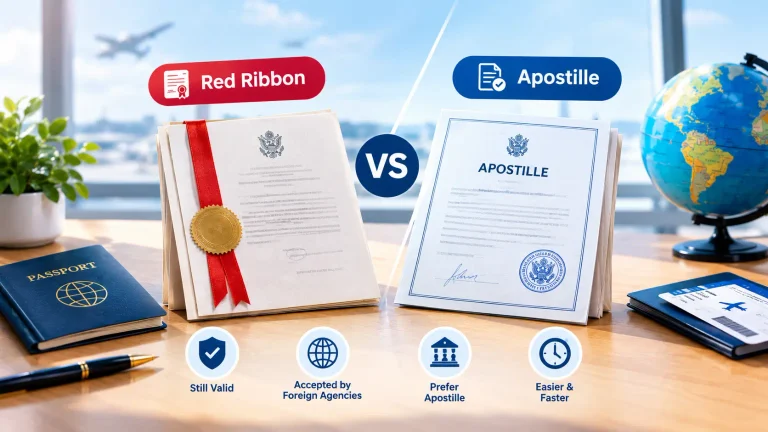
A DFA apostille appointment is a scheduled online booking that lets you submit a Philippine public document to the Department of Foreign Affairs for authentication under the Hague Apostille Convention. An apostille is a certificate attached to your document that verifies the signature, seal, or stamp on it is genuine, which allows the document to be recognized in other member countries without needing further embassy legalization. The DFA issues apostilles in the Philippines, and this system replaced the older, multi-step red ribbon authentication process.
Booking works through a separate system from the one used for passport appointments, since apostille and passport services run on different portals with their own schedules and fees. Appointment arrangements, including whether walk-ins are accommodated, can vary by branch and service type, so it is best to check the current official appointment instructions before assuming how a specific office handles submissions.
Who Can Apply
In most cases, you can only request an apostille for your own documents, though there are a few recognized exceptions, such as a parent requesting an apostille for a minor child’s birth certificate. Institutions can also apply for an apostille on documents they issued or hold when authorized to do so. If you cannot appear in person, the DFA generally allows an authorized representative to submit and claim your documents on your behalf, provided they bring a signed authorization letter along with their own valid ID and a copy of yours.
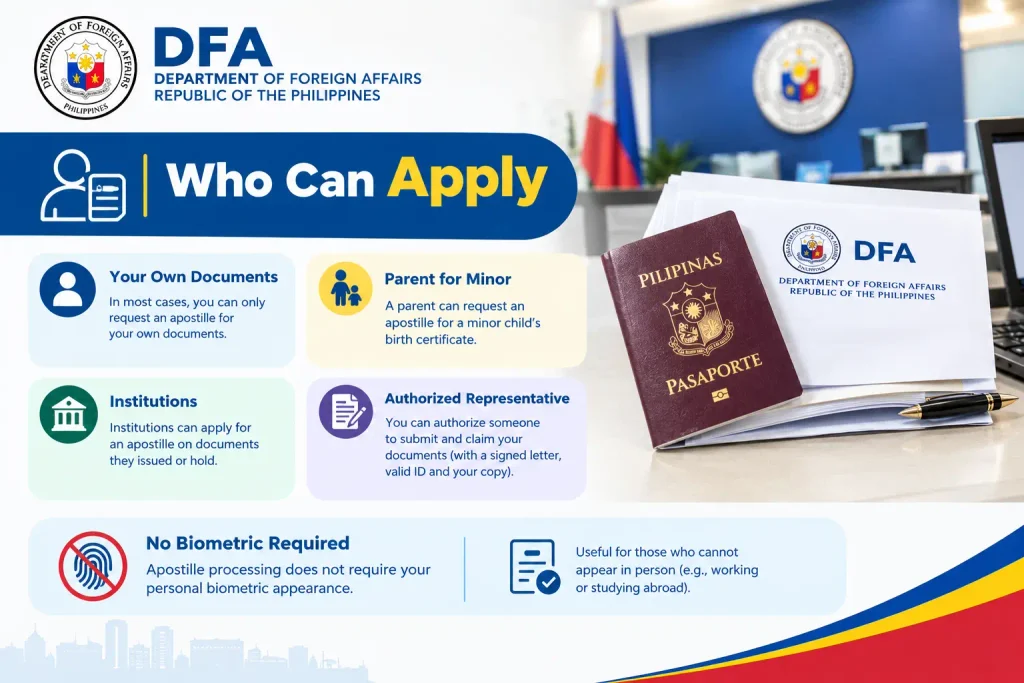
Unlike a passport appointment, apostille processing does not require your personal biometric appearance, since the DFA is authenticating a document rather than verifying your identity for a travel document. This can be useful for applicants who cannot appear personally, such as those already working or studying abroad.
Documents Commonly Submitted for Apostille
The apostille process covers a wide range of Philippine public documents, and knowing which category yours falls under helps you prepare the right supporting paperwork. Commonly apostilled documents include PSA-issued civil registry documents such as birth, marriage, and death certificates, along with NBI clearances, school records, diplomas, and transcripts. Corporate and legal documents like SEC registration papers, articles of incorporation, and notarized affidavits are also frequently submitted for apostille, particularly by businesses and professionals working with foreign partners.
The document must meet DFA authentication requirements, which vary depending on the type of document, and foreign-issued documents cannot be apostilled by the DFA. If your document was executed outside the Philippines, check the current DFA guidelines for that specific document type, since requirements can differ depending on where and how it was signed.
DFA Apostille Appointment Requirements
Preparing your documents correctly before booking saves you from a rejected submission at the counter.
Basic Requirements
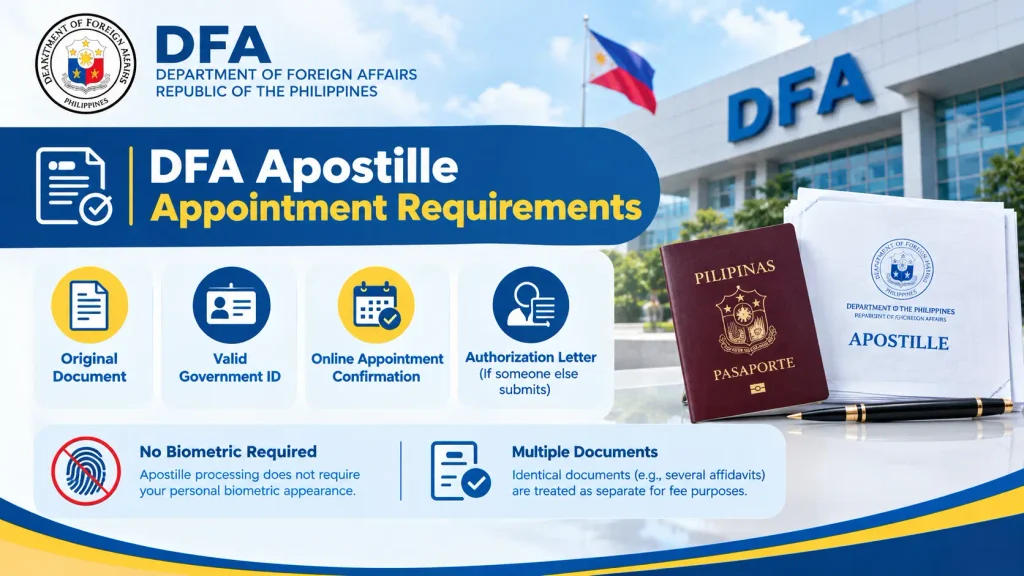
At minimum, you need the original document you want apostilled, a valid government-issued ID, and your confirmed online appointment confirmation. If someone else is submitting on your behalf, add a signed authorization letter along with the representative’s own valid ID and a photocopy of yours. Documents with multiple identical copies, such as several affidavits for different purposes, are generally treated as separate documents for fee purposes even if submitted together in one appointment.
How to Book a DFA Apostille Appointment
Booking an apostille appointment follows a similar logic to booking a passport slot, though it runs through its own dedicated system.
Start by visiting the official apostille appointment website rather than a search result link, since look-alike sites and unofficial “assistance” pages exist around this service. Select the consular office nearest you, such as DFA Aseana, a regional consular office, or a satellite location, then choose an available date and time slot. Declare every document you plan to submit at this stage, since only documents declared during the online application will be processed, and anything added later requires a separate booking. Complete payment through the official ePayment system or DFA cashier, keeping in mind that these payments are non-refundable, and watch for your confirmation email with your appointment details.
Fees and Processing Time
Apostille fees and turnaround times depend on which processing option you choose, and the DFA has been expanding its options in recent years.
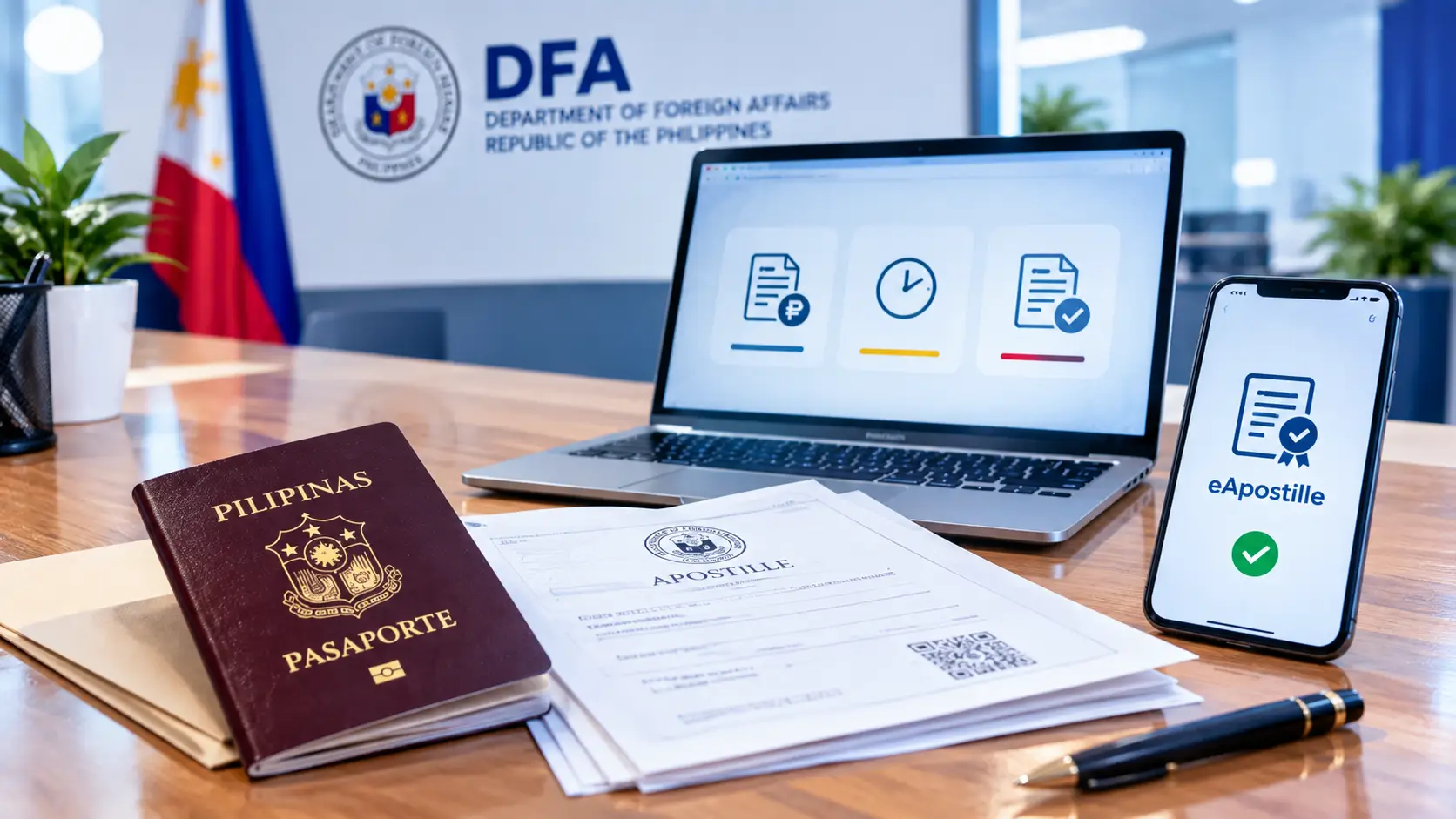
Apostille fees and turnaround times depend on which processing option you choose, and these can be adjusted by the DFA from time to time. The DFA Authentication Division publishes a fee schedule covering regular and expedited processing, and a newer eApostille option is also available as a digital alternative to the traditional paper certificate. If you are unsure whether your document needs an apostille or the older red ribbon authentication process, read our guide explaining the difference between red ribbon and apostille. Because fee amounts, release timelines, and online booking charges are subject to change and can appear slightly differently across official pages, treat any specific peso amount or working-day figure you see elsewhere as a starting reference only, and confirm the exact current rates on the official apostille appointment website before you book.
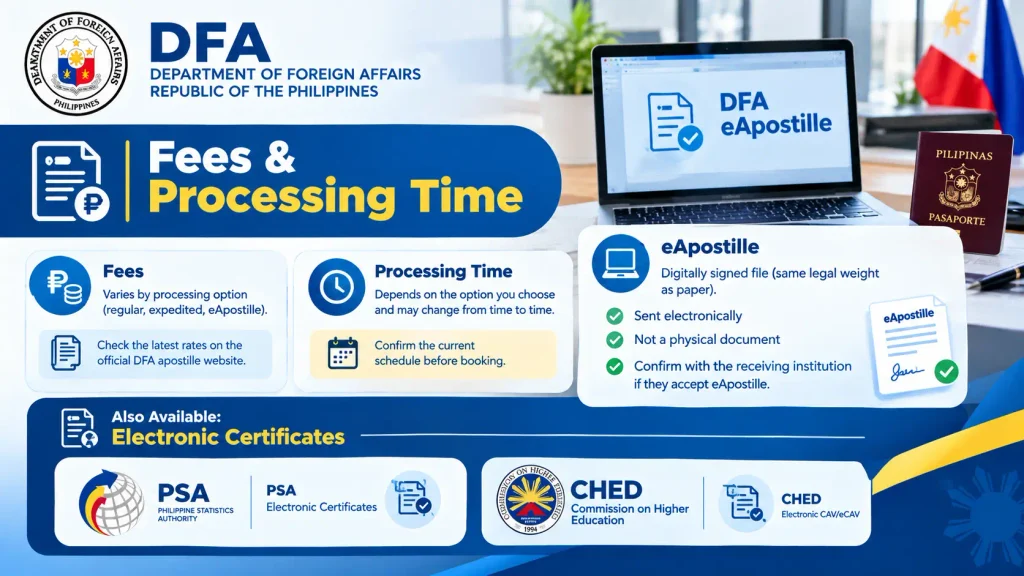
The eApostille is a digitally signed file intended to carry the same legal weight as a paper apostille, and it is meant to be sent electronically rather than handed over as a physical document. Before choosing eApostille over the traditional paper version, check with the receiving institution or foreign government office to confirm they accept an electronic apostille, since not every recipient may be set up to receive one.
PSA electronic certificates
CHED electronic CAV/eCAV
Appointment Day Checklist
Showing up prepared keeps your visit to a single trip rather than two.
Bring the original document you are apostilling, one valid government-issued ID, and your printed or digital appointment confirmation with the correct document list declared. If you are using a representative instead of appearing yourself, make sure they carry the signed authorization letter, their own ID, and a photocopy of your ID as well. Keep your claim stub safe after submission, since you will need to present it along with a valid ID when you return to collect your apostilled document on the release date.
Common Problems and Solutions
A handful of recurring issues can affect applicants going through this process.
Missing your scheduled appointment generally means the slot is forfeited, so you will need to book again rather than simply walking in on another day. Declaring the wrong documents, or forgetting to list one you actually plan to submit, means that undeclared document cannot be processed during that visit and needs its own separate appointment. Unclaimed apostilled documents are not held indefinitely, so it is best to check the current retention policy on the official apostille site and claim your document as soon as it becomes available rather than waiting. If you run into an identity verification issue during an online eApostille application, check the platform’s own instructions for how to proceed, since the exact fallback process can depend on the system in use. For more information about the agency responsible for Philippine apostille services, visit our guide to the Department of Foreign Affairs.
Final Thoughts
A DFA apostille appointment comes down to a few core steps: book online with the correct documents declared, choose the processing option that fits your timeline, and return on your release date with your claim stub in hand. Whether you are apostilling a diploma for a foreign university, an NBI clearance for an overseas job, or a PSA certificate for immigration purposes, the process itself does not change much between document types. Taking a few extra minutes to declare your documents correctly and confirm current fees before booking goes a long way toward avoiding an extra trip.