Department of Foreign Affairs (DFA): Services, Appointments & Offices
Almost every Filipino ends up at the DFA at some point. You need a passport for your first trip abroad. You need a document apostilled for a job overseas. You need a civil registry record authenticated for immigration. The name is familiar, but what the department actually does, and how its various services connect, is less clear to most people.
This guide lays out exactly what the Department of Foreign Affairs handles, which service applies to your situation, and how to move through the appointment process without wasted trips.
What Is the Department of Foreign Affairs
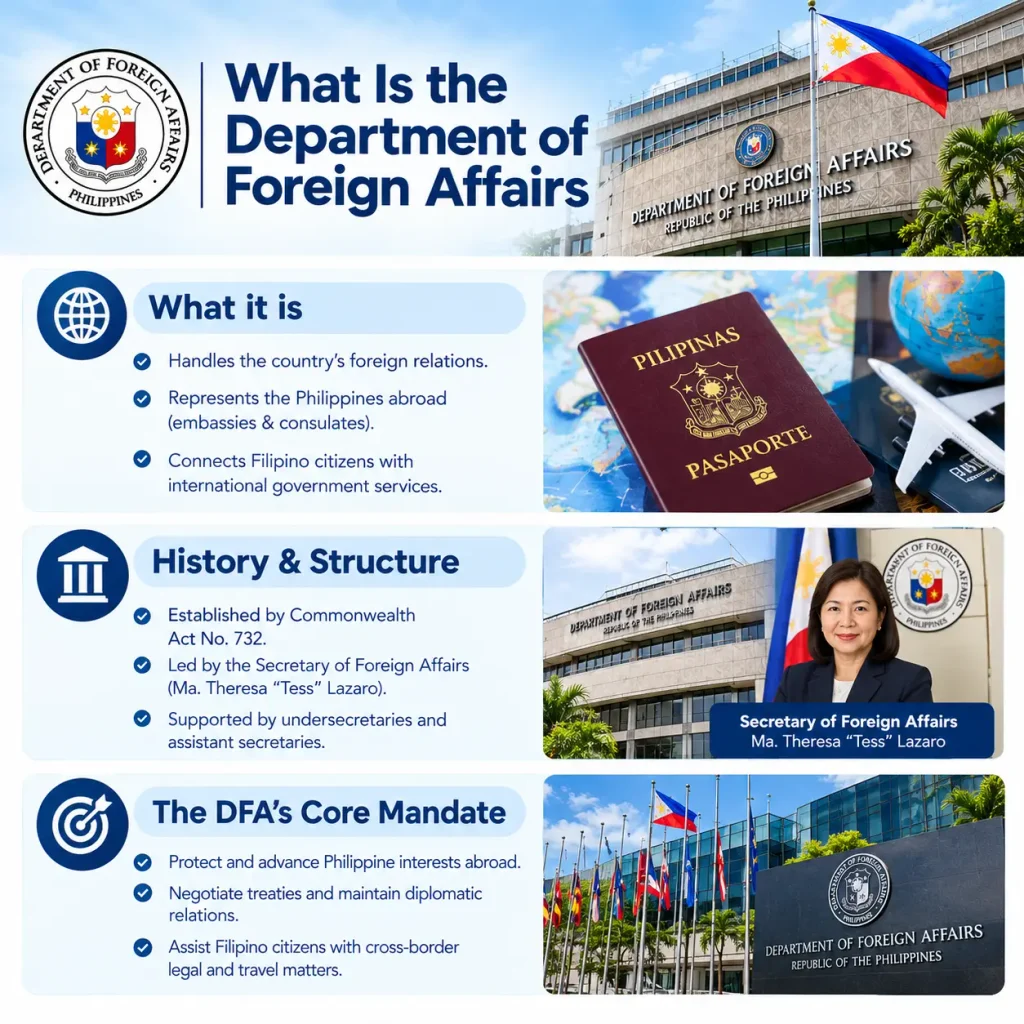
The Department of Foreign Affairs, commonly shortened to DFA, is the executive department of the Philippine government responsible for the country’s foreign relations. It represents the Philippines abroad through its network of embassies and consulates, and it serves as the primary link between Filipino citizens and the international side of government service. Domestically, most people know the DFA best for its passport, apostille, and document authentication services rather than its diplomatic functions.
A Brief History and Structure
The department traces its modern form to Commonwealth Act No. 732, which formally established the DFA after the Philippines regained full control over its foreign affairs. Today, the DFA operates under a Secretary of Foreign Affairs, currently Ma. Theresa “Tess” Lazaro, who leads the department’s diplomatic and consular functions and reports directly to the President of the Philippines. Below the Secretary sits a structure of undersecretaries and assistant secretaries overseeing different regions and functions, from bilateral relations to consular affairs.
The DFA’s Core Mandate
At its core, the DFA exists to protect and advance Philippine interests abroad while assisting Filipino citizens with cross-border legal and travel matters. This includes negotiating treaties, maintaining diplomatic relations with other countries, and coordinating the country’s foreign service officers stationed overseas. For everyday Filipinos, though, the department’s consular and civil functions,
such as issuing passports and authenticating documents, are the services that matter most.
Services Offered by the DFA
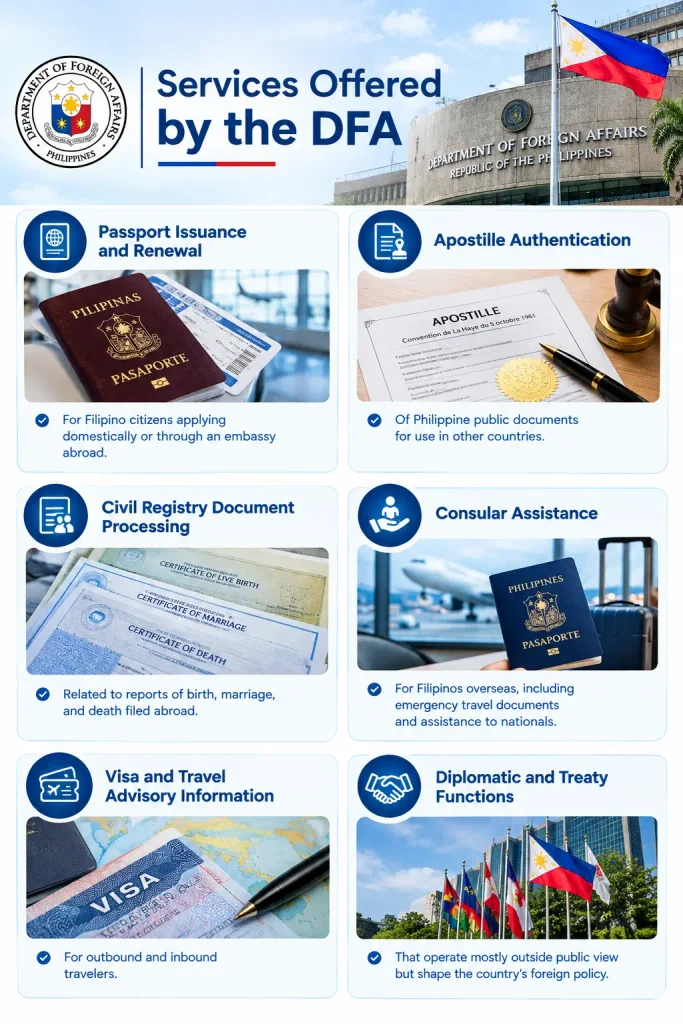
The DFA’s public-facing services fall into a handful of clear categories, each with its own booking system and requirements.
Which DFA Service Do You Need
Figuring out the right service before you book anything saves you from an unnecessary trip or a mismatched appointment.
| If you need to… | The relevant DFA service is… |
| Get a new or renewed Philippine passport | Passport Services |
| Authenticate a document for use abroad | Apostille Authentication |
| Process a birth, marriage, or death record filed overseas | Civil Registry Services |
| Get help while stranded or in trouble abroad | Consular Assistance |
| Check travel advisories for a destination | Travel Advisory Information |
If your need does not clearly fall into one category, the safest step is checking the official DFA website or contacting your nearest consular office directly before assuming which service applies. Applicants looking for passport services can read our guide to the Philippine passport application process for an overview of the steps involved.
Passport Services
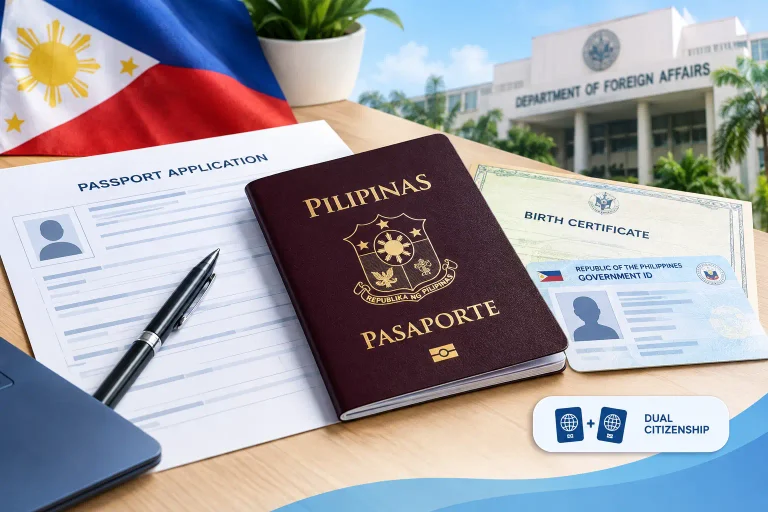
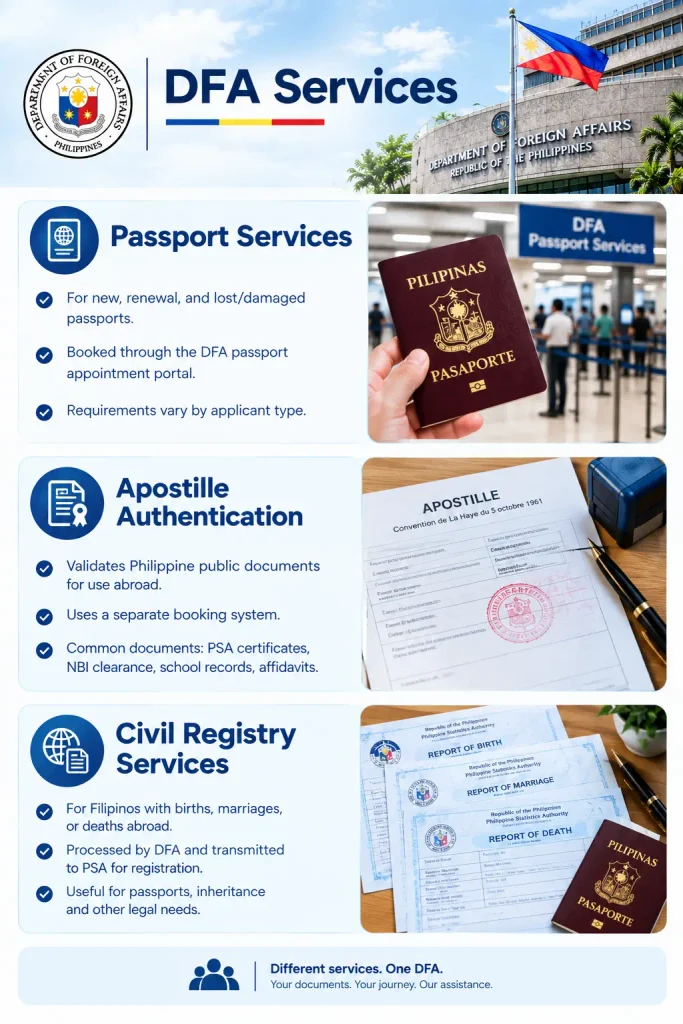
Passport issuance is the DFA’s most visible public service, and it is what most Filipinos associate with the department first. New applicants, renewing applicants, and those replacing a lost or damaged passport all go through the same general system, booked through the dedicated passport appointment portal rather than a general DFA page. Requirements differ slightly by applicant type, though core documents like a PSA birth certificate and a valid government-issued ID form the foundation for most cases.
Who Handles Passport Appointments
Passport bookings run through the DFA’s dedicated online appointment system rather than a general DFA contact channel. Slots open based on branch availability, and Metro Manila offices tend to have the tightest demand. Provincial and satellite branches inside malls offer additional options for applicants who cannot easily reach a main consular office.
Apostille Authentication
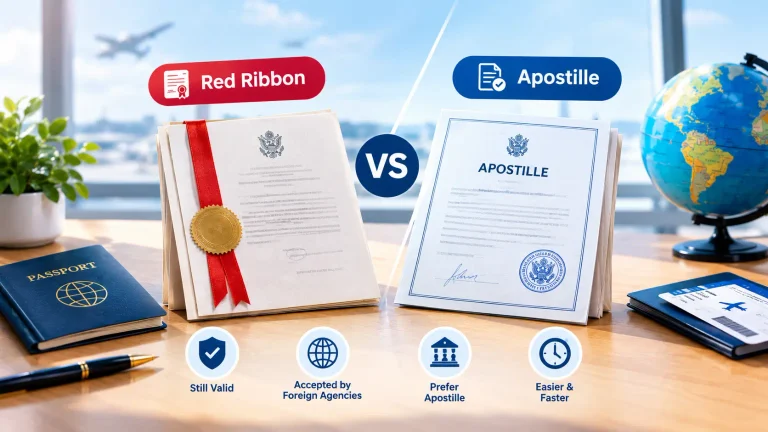
Apostille authentication verifies that a Philippine public document is genuine, allowing it to be recognized abroad without going through further embassy legalization. This service replaced the older red ribbon authentication process and now runs through its own separate booking system. Commonly apostilled documents include PSA civil registry certificates, NBI clearances, school records, and notarized affidavits, each carrying its own fee depending on the processing option chosen.
How Apostille Differs From Passport Services
Unlike passport applications, apostille submissions do not require biometric capture, so personal appearance is not strictly mandatory in every case. Authorized representatives can often submit and claim documents on an applicant’s behalf, provided they carry the proper authorization letter and identification. This distinction matters for OFWs and other applicants who cannot travel back to the Philippines to handle the process themselves.
Civil Registry Services
The DFA’s involvement in civil registry matters mainly concerns Filipinos whose births, marriages, or deaths occurred abroad. Reports of Birth, Reports of Marriage, and Reports of Death filed through a Philippine embassy or consulate eventually get transmitted to the Philippine Statistics Authority for registration into the national civil registry system. This process connects overseas events to a Filipino citizen’s official domestic records, which later become necessary for passport applications, inheritance matters, or other legal transactions back home. For document authentication information, see our guide to the DFA apostille appointment process.
Where PSA and DFA Roles Overlap
It helps to understand that the DFA itself does not issue PSA-certified copies of birth or marriage certificates. The Philippine Statistics Authority handles that function domestically. The DFA’s role sits specifically at the point where an overseas civil event gets reported and transmitted into that same national system through embassy or consulate channels.
How to Access DFA Services
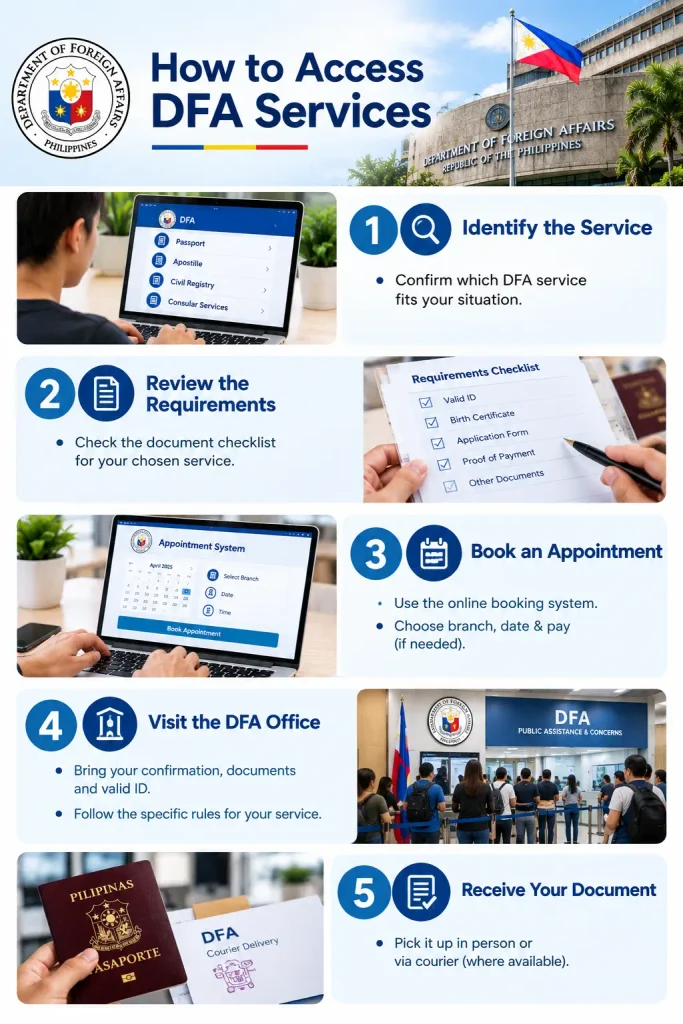
Regardless of which service you need, the general path through the DFA system follows a similar pattern.
Identify the Service
Confirm exactly which DFA service applies to your situation before booking anything, since passport, apostille, and other services run through separate systems with their own requirements.
Review the Requirements
Each service publishes its own document checklist on the relevant official page. Reviewing this in advance, rather than assuming your documents match a different service’s requirements.
Book an Appointment
Most DFA services now require an online booking rather than a walk-in visit. Select your preferred branch, choose an available date, & complete payment where required before your slot is done.
Visit the DFA Office
Arrive with your printed confirmation, original documents, and valid ID. Personal appearance requirements vary by service, so confirm beforehand whether you, a representative, or both need to be present.
Receive Your Document
Depending on the service, you can claim your document in person or, where available, through courier delivery. Keep your claim stub and reference number until you actually have the finished document in hand.
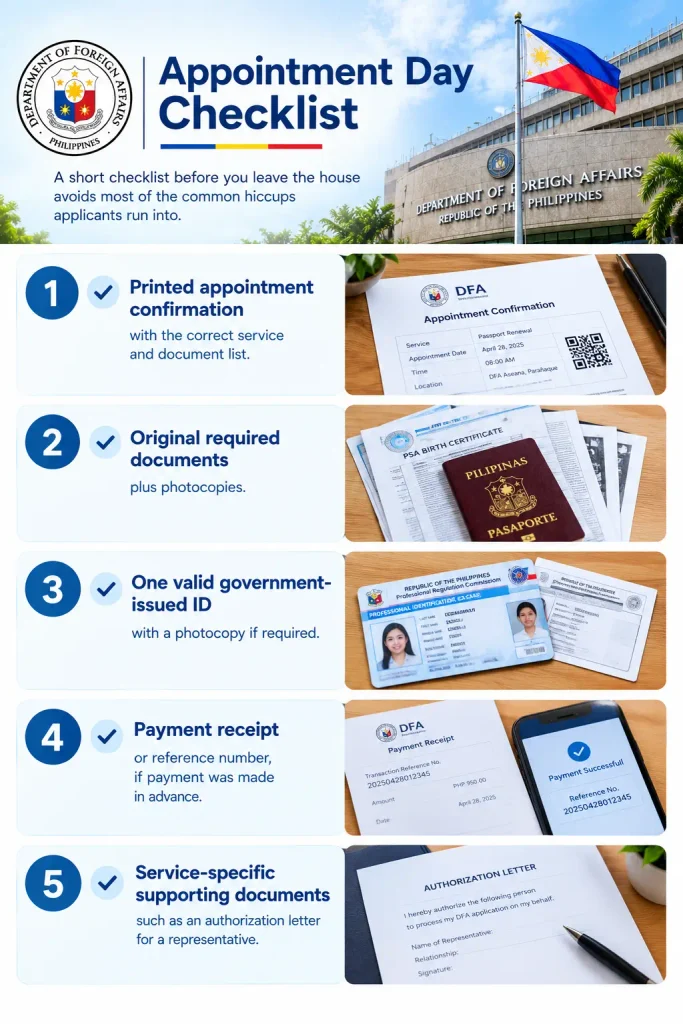
Appointment Day Checklist
A short checklist before you leave the house avoids most of the common hiccups applicants run into.
Frequently Asked Questions
Final Thoughts
The Department of Foreign Affairs covers far more ground than most people realize, but for the average Filipino, the experience usually narrows down to just a few services: passports, apostilles, and occasionally civil registry matters tied to events abroad. Knowing which service applies to your situation, and preparing the right documents before you book, turns what can feel like a confusing government process into a fairly manageable one.