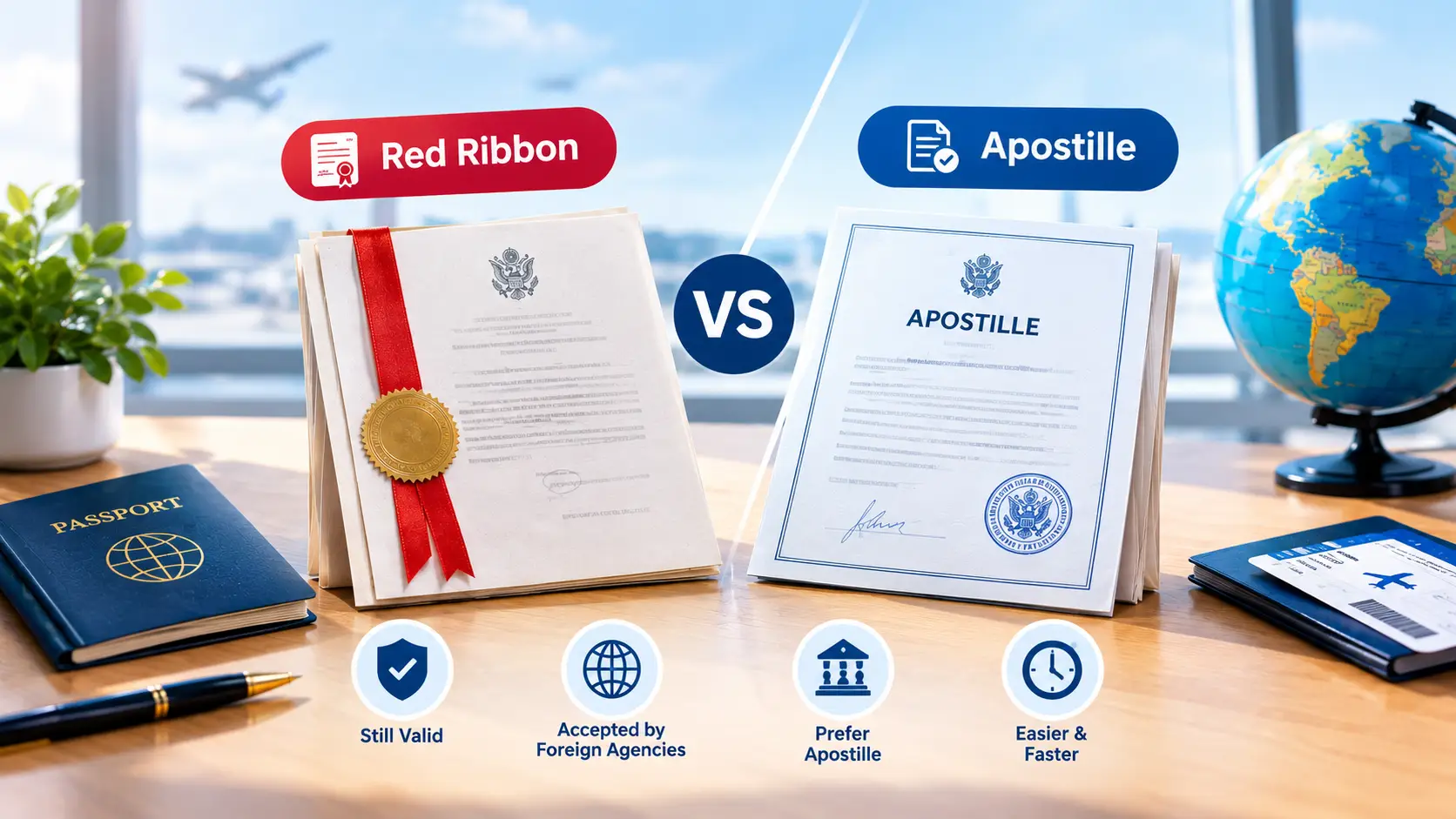
Red Ribbon vs Apostille: Key Differences, Requirements
Someone told you your document needs to be “red ribboned” before it can be used abroad. You search for a DFA red ribbon appointment and instead find articles talking about something called an apostille. The advice you got was not wrong exactly, just outdated by several years.
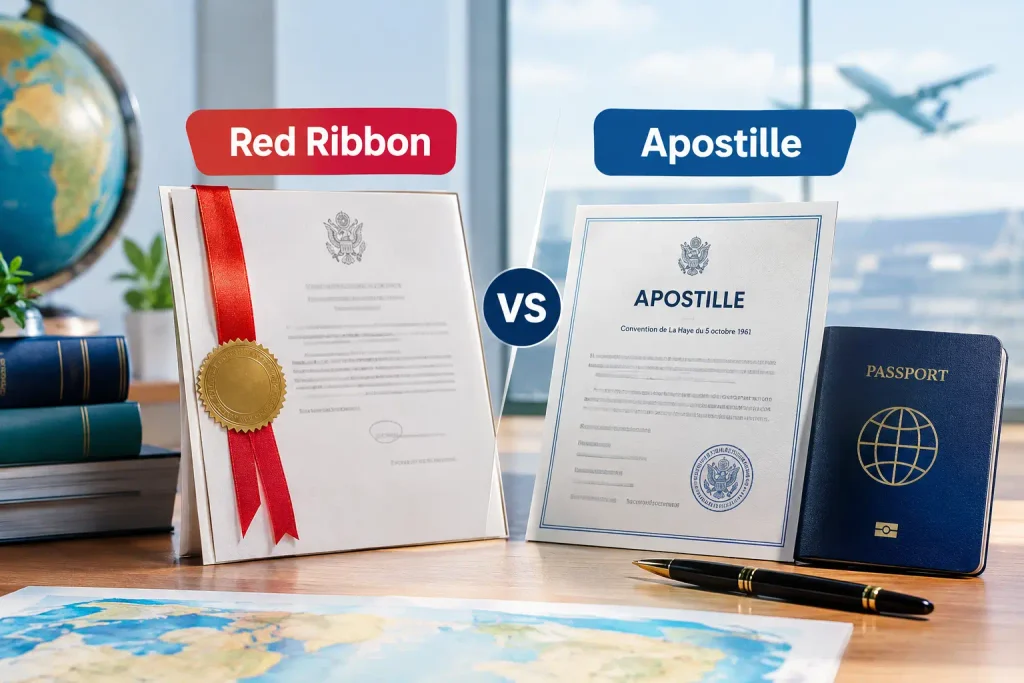
This guide clears up the confusion. It explains what red ribbon authentication actually was, what replaced it, and how to know which one your specific document needs today.
What Is Red Ribbon Authentication
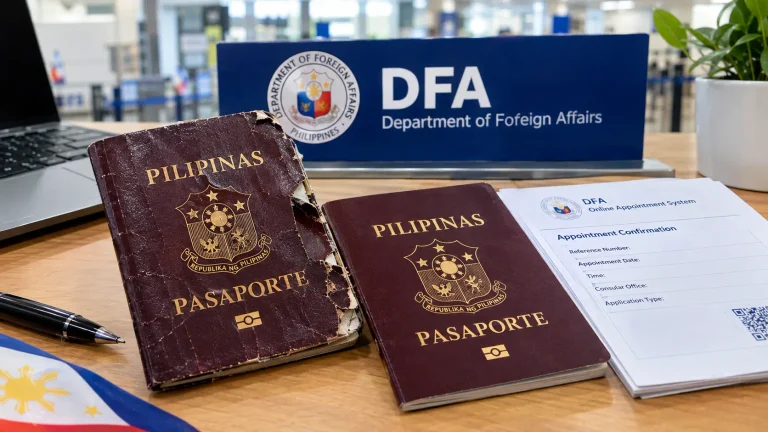
Red ribbon, formally known as authentication or consular legalization, was the DFA’s old system for certifying that a Philippine document was genuine before it could be used overseas. The process got its nickname from the literal red ribbon physically fastened to the document, along with a gold seal, to show that no pages had been added or removed after certification.
Under this older system, a document went through a multi-step chain: the issuing agency certified it, the DFA authenticated it, and then the destination country’s embassy or consulate in the Philippines legalized it a second time. This second step, embassy legalization, is exactly what the apostille system was designed to eliminate for member countries.
What Is an Apostille
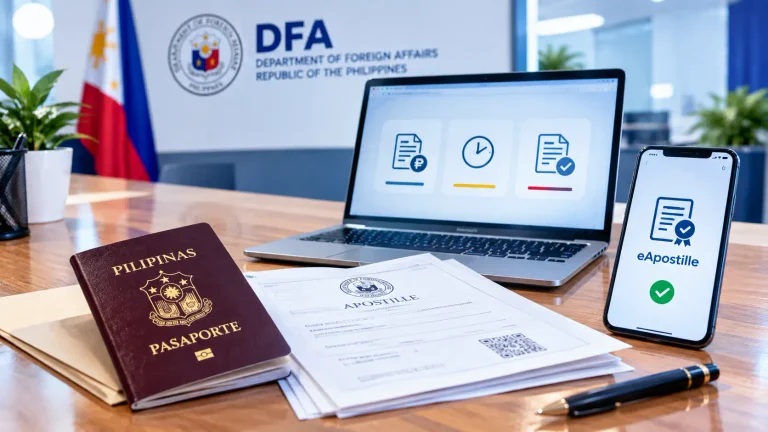
An apostille is a single-step certificate issued under the Hague Apostille Convention that verifies the signature, seal, or capacity of the official who signed or issued a public document. It does not verify the truth of the document’s content, only that the signature and authority behind it are genuine. The Philippines joined the Apostille Convention, with the change taking effect on May 14, 2019, and the DFA’s Office of Consular Affairs now serves as the country’s Competent Authority for issuing apostilles.
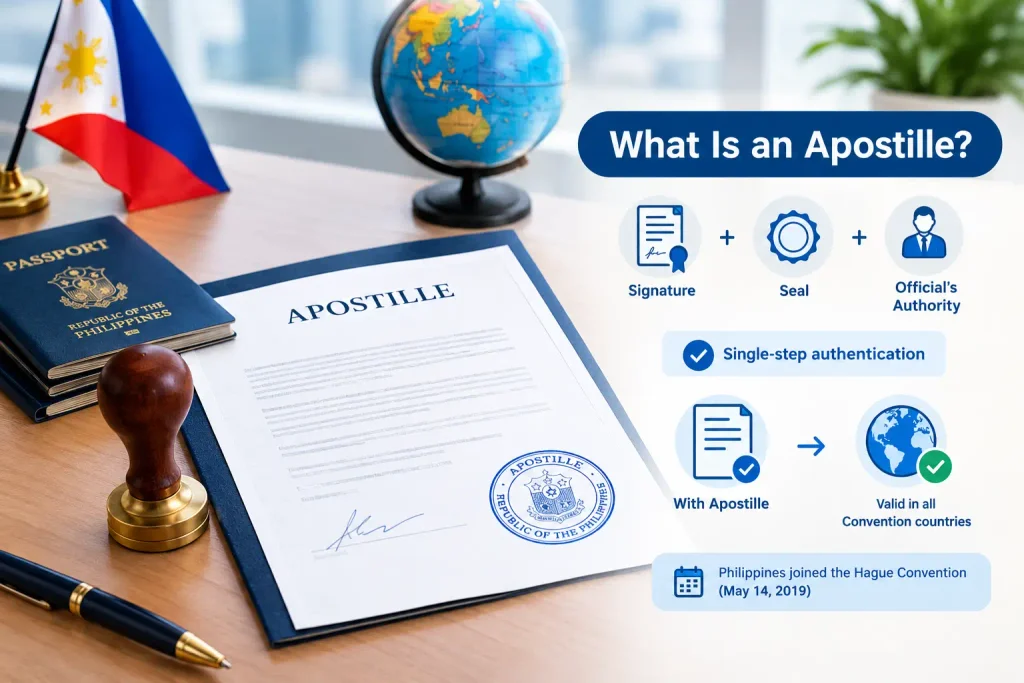
Once a Philippine document carries an apostille, it can generally be used directly in any other Convention member country without needing further embassy or consular legalization. This is the core difference that made the apostille system faster than the old red ribbon chain for most applicants.
Red Ribbon vs Apostille
Here is a direct comparison of how the two systems differ.
| Feature | Red Ribbon (Authentication) | Apostille |
| Legal basis | Traditional consular legalization | Hague Apostille Convention |
| Steps required | DFA authentication, then embassy legalization | Single DFA apostille certificate |
| Applies to | Non-Convention countries and certain exceptions | Convention member countries |
| Physical format | Ribbon and gold seal attached to the document | A standardized one-page certificate |
| Current status in the Philippines | Still used, but only for non-member destinations | Standard process for most destinations since May 2019 |
The DFA no longer attaches an actual physical red ribbon even in cases requiring the traditional route. For non-member destinations, it issues an Authentication Certificate instead, which then still proceeds to embassy legalization. Many people continue calling this “red ribbon” out of habit, even though the physical ribbon itself is no longer part of the process.
Which One Do You Need
Your destination country determines which process applies, not the type of document itself.
If your document is headed to a country that is a member of the Hague Apostille Convention, you need an apostille. This covers the large majority of common destinations for Filipino applicants, including most countries where OFWs work and study. If your destination country has not joined the Convention, or falls under one of the small number of countries that formally objected to the Philippines’ accession, such as Finland and Germany, you still need the traditional authentication and embassy legalization route instead.
Because the list of Convention members and objecting countries can change, and because some receiving institutions maintain outdated checklists that still reference red ribbon, it is worth confirming your destination country’s current status directly through the DFA’s authentication division or the Hague Conference’s own reference materials before assuming which route applies to you.
Can You Still Use an Old Red Ribbon
A red-ribboned document issued before May 2019 generally remains valid for what it originally certified, since the change affected the process for new applications going forward rather than invalidating documents already completed. Whether the receiving foreign agency still accepts it today is a separate question entirely, and this depends on that specific agency’s own current policy rather than any blanket rule from the Philippines. Many receiving institutions now prefer or explicitly require a current apostille, regardless of how recently the underlying document was issued, since apostilles are easier for them to verify against a standardized international format.
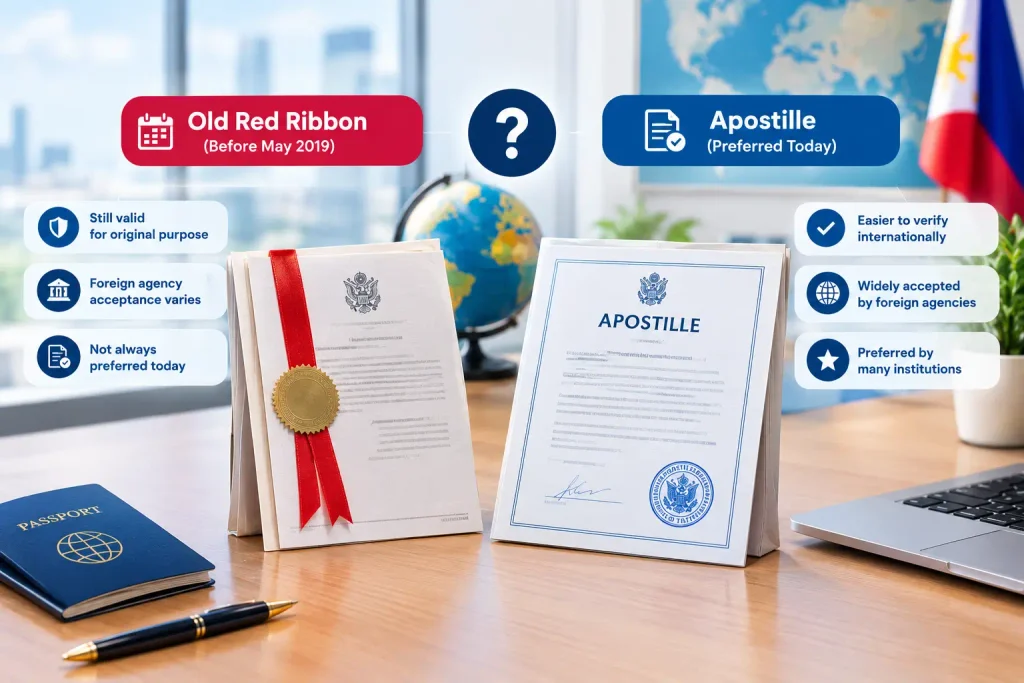
If you are relying on an old red-ribboned document for something time-sensitive, such as an employment or visa application, confirming directly with the receiving institution whether they will still accept it is safer than assuming it remains sufficient. When in doubt, applying for a fresh apostille avoids the risk of your document being rejected after you have already submitted it.
How to Get an Apostille
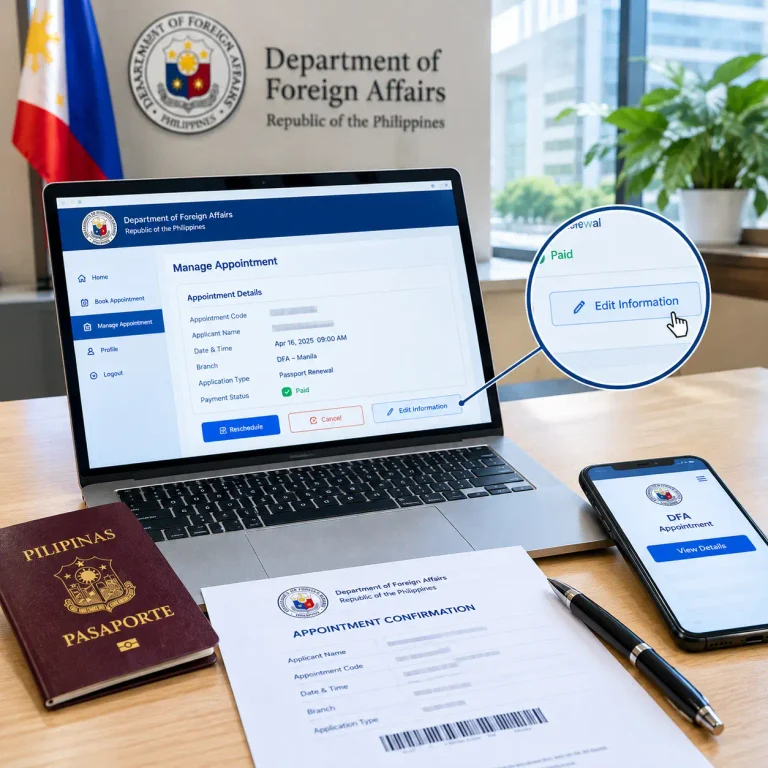
Getting an apostille starts with a confirmed online appointment through the DFA’s dedicated apostille booking system, separate from the passport appointment portal. Choose your consular office, select an available date, and declare every document you plan to submit during that booking, since only documents declared in advance are processed during your visit. On your appointment day, bring the original document along with a valid ID, and pay the applicable fee, whether you choose regular, expedited, or the newer eApostille processing option.
Certain documents need an additional certification step from the issuing agency before the DFA can apostille them. PSA civil registry documents, for instance, should be obtained on security paper directly from the PSA, while some notarial documents may need verification through the notary’s regional authority first. Reviewing your specific document type’s preparation requirements before booking helps avoid a rejected submission at the counter.
Frequently Asked Questions
Final Thoughts
Red ribbon and apostille solve the same underlying problem, proving a Philippine document is genuine so it can be used abroad, but they are not interchangeable anymore for most applicants. Since May 2019, the apostille has become the standard route for documents headed to Convention member countries, while the older authentication and legalization chain survives only for the shrinking list of non-member destinations. Knowing which one your specific destination requires, rather than defaulting to whatever term you heard first, is what keeps your document from getting rejected down the line.